Ghost number plates crackdown in the UK – Police get new goggles to catch drivers hiding from cameras

Key Points
- DfT is funding a new National Roads Policing Coordination Centre covering forces across England
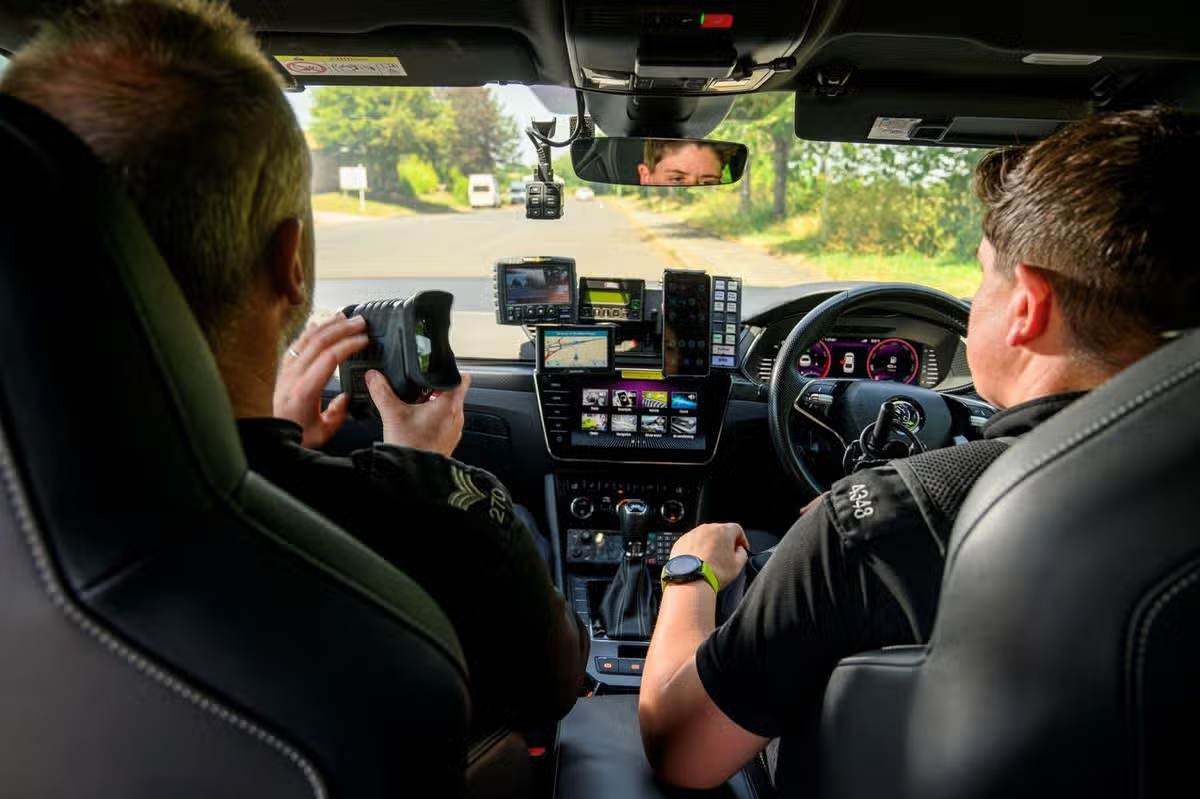
- The unit will trial goggles that read ghost plates treated to defeat ANPR cameras
- Cloned, ghost and missing plates all count as illegal, with fines of up to £1,000
- The crackdown sits within the government's first Road Safety Strategy in more than a decade
The Department for Transport (DfT) is funding a new National Roads Policing Coordination Centre (NRPCC) that will trial specialised goggles to detect number plates designed to defeat cameras, with offenders facing fines of up to £1,000.
The DfT said the NRPCC will bring together police forces from across England to share intelligence and make better use of data in a nationwide crackdown on illegal number plates.
The unit will target both drivers dodging fines and organised crime gangs using the road network to move illegal goods.
The goggles are one of several technologies the centre will test, and they are built to read plates that criminals have treated to appear blank or unreadable to automatic number plate recognition (ANPR) cameras.
Drivers use these plates to evade speeding, parking and clean air zone penalties, and vehicles that hide from ANPR are harder for police to trace when they are stolen or linked to serious offences.
The DfT said illegal plates take three main forms:
- Cloned plates, where a vehicle carries a copied registration belonging to another legitimate vehicle
- Ghost plates, where a transparent film makes the registration undetectable to cameras
- Missing plates, where a vehicle displays no registration at all
Anyone driving with an incorrectly displayed number plate can receive a fine of up to £1,000.
“We’re cracking down on illegal number plates with new policing resource and innovative tech,” said Justin Madders, Roads Minister at the DfT. “This is a signal to anyone using illegal number plates that their time is up,” he added.
The NRPCC has already run a ghost plates operation with participating forces, which the police said showed how effective an intelligence-led approach is at catching offenders and helping drivers keep their plates compliant.
“Through the National Roads Policing Coordination Centre, our mission is to tackle the biggest risks to road safety, enhancing and developing the police response to criminality both on and off the roads,” said Marc Clothier, Chief Superintendent and Deputy National Coordinator for the NRPCC.
The scale of the problem has grown sharply in recent years. The UK’s ANPR network captures around 90 million reads a day from more than 18,000 cameras, but a report from the All-Party Parliamentary Group for Transport Safety found that as many as one in 15 vehicles may carry modified plates designed to evade it.
“Illegal number plates are not a victimless offence. They are used by criminals to avoid detection, move illegal goods and stay one step ahead of law enforcement,” said Sarah Jones, Policing and Crime Minister at the Home Office.
The crackdown forms part of the government’s Road Safety Strategy, the first in more than a decade, which the DfT said aims to save thousands of lives.
The strategy has already consulted on stronger penalties for drivers using illegal plates, a review of number plate standards and tougher enforcement.
The DVSA and DVLA are also working with police to support investigations into businesses that supply illegal plates and to assist with roadside operations.