Where and when to watch the solar eclipse in the UK

Key Points
- People in the United Kingdom will be able to see a partial solar eclipse on Wednesday 12 August.
- The eclipse is the most complete seen in the British Isles since 1999, and will be visible in the evening.
- Those interested in watching the eclipse should get to a high point with a clear view of the western horizon.
- Times and coverage vary depending on where you are watching the eclipse from, with viewers in London seeing the eclipse at 90% coverage.
On Wednesday 12 August, people in the United Kingdom and Ireland will have the opportunity to see a partial solar eclipse.
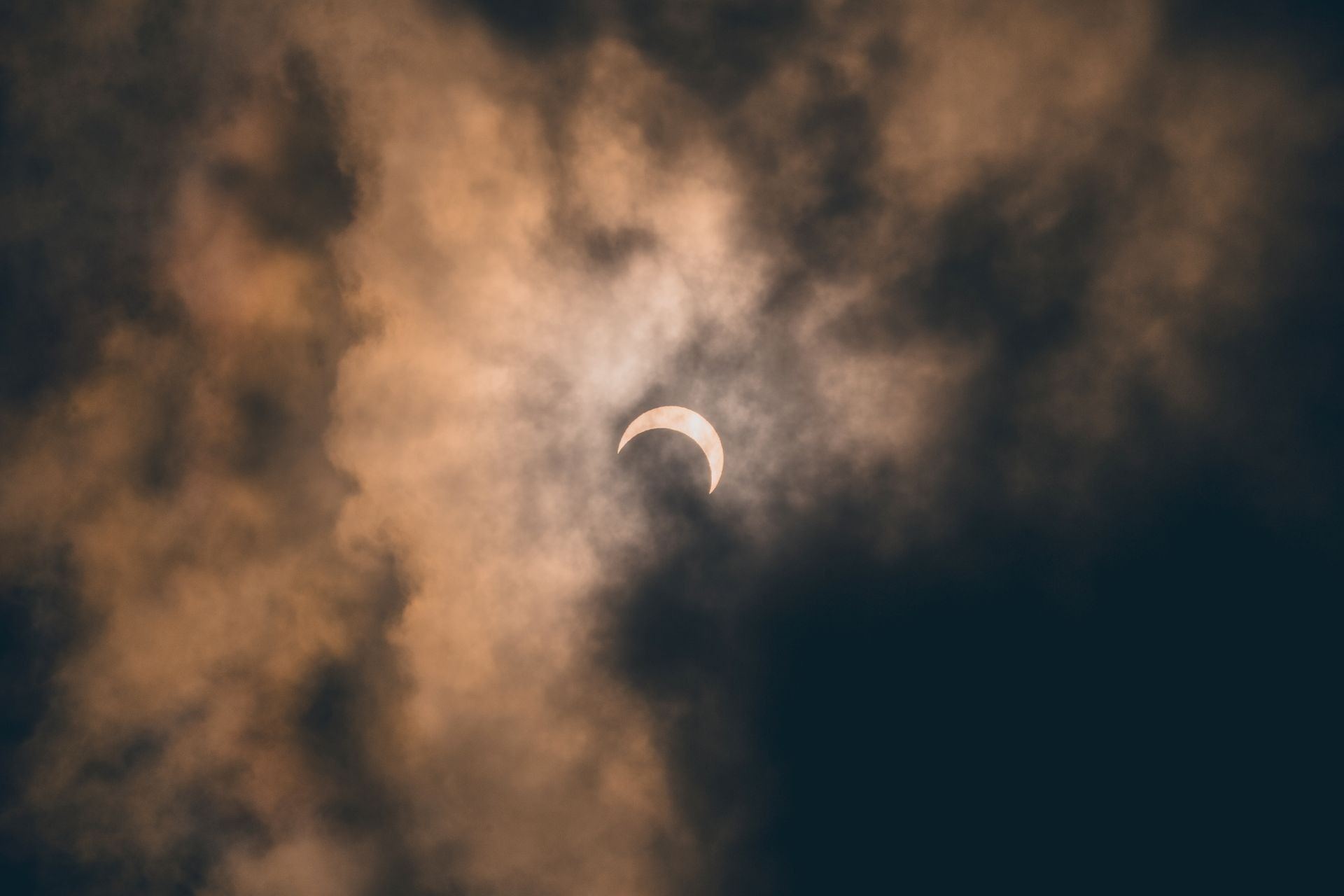
At a certain point in the day, around 90-96% of the Sun will be covered by the Moon, making this eclipse the most complete solar eclipse seen in the UK since 1999.
On Wednesday evening, the Sun and the Moon will move gradually closer together until the Moon will first begin to cover part of the Sun. It will then slowly occlude more of the Sun until reaching its maximum coverage (around 90% from London).
According to the Royal Observatory Greenwich, the amount of coverage at the eclipse’s maximum will be enough to make a noticeable difference to temperature and light levels for observers.
The sky will not become dark as it does in a total eclipse, however. After maximum coverage is reached, the Moon will begin to slowly move away from the Sun until the eclipse ends about an hour later.
Where to watch the solar eclipse on Wednesday 12 August
To find the best spot to watch the partial eclipse in the United Kingdom, the Royal Observatory Greenwich recommends getting to a high point with a clear view of the western horizon, from where you will have a good chance of seeing the whole event.
The more south-west you are in the United Kingdom, the more coverage you will be able to see of the eclipse.
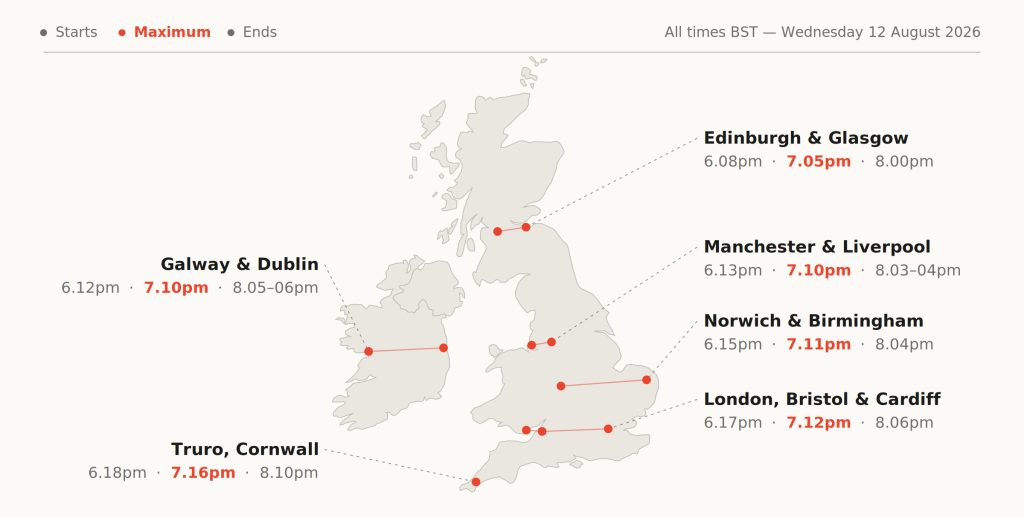
Those in London will see the eclipse at 90% coverage, but if you are in Cornwall, you will see 94%, and at the south-western tip of Ireland, you could see up to 97.5% coverage.
The image below shows the expected time of the partial solar eclipse at various locations across the United Kingdom and Ireland.
Cities in Europe for which this eclipse will be a total solar eclipse (100% coverage) include Reykjavik in Iceland and Valencia in Spain.
How to watch the eclipse
It is important that you do not look at the eclipse with your unprotected eyes or with standard sunglasses.
To watch the eclipse safely, you should only look at the phenomenon through a pinhole projector, solar telescope, or while wearing special eclipse glasses.
If you have bought eclipse glasses, make sure that they have the ‘ISO 12312-2′ or ‘ISO 12312-2:2015’ safety certifications printed on them, and that they are undamaged.
You can learn how to make a pinhole camera on the NASA website, and you can watch the eclipse through a solar telescope at an event hosted by the Royal Observatory from 4pm onwards.
The Royal Observatory will also be live-streaming the eclipse on its website for those who are unable to watch the event as it happens.