Farage sets outs his plan for immigration and the Channel – how it would work


Key Points
- Reform UK would deploy the Royal Navy to intercept all small boats in the Channel and return the occupants to France or Belgium, under a plan called Operation Fortress.
- A joint command of Navy, Marines, RAF and Army units would detain occupants, provide food, water and a medical assessment, then escort them back.
- Maritime law does not permit returning people to another state without that state's consent, and France has not agreed to accept them.
- Crossings for the year to date stand at 14,526, down 43% on the same point in 2025.
- Reform UK says it would legislate to give the command any extra powers it needs.
Reform UK has said it would order the Royal Navy to intercept every small boat crossing the English Channel and return the people on board to France or Belgium.
The party set out the plan, which it calls Operation Fortress, at a news conference on Monday (3 August), describing it as the largest military operation in the Channel since the Second World War.
“Britain is being invaded,” said Zia Yusuf, Home Affairs Spokesman at Reform UK. Yusuf told BBC Radio 4’s Today programme that former senior members of the armed forces had endorsed the scheme.
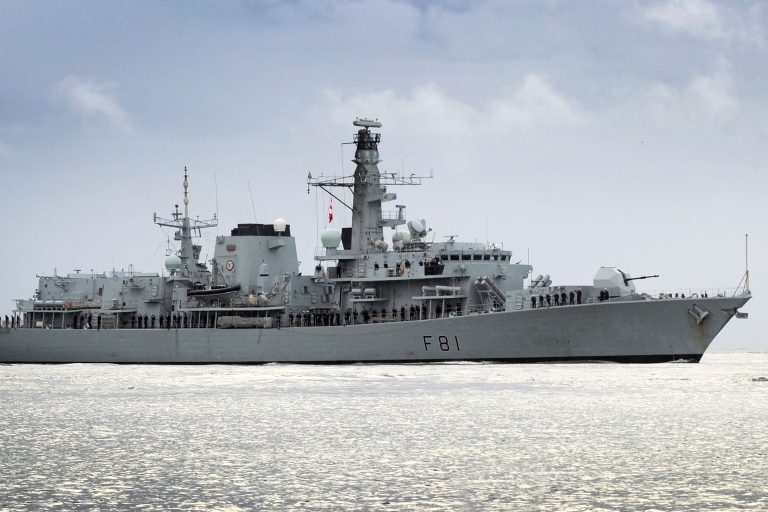
Under the plan, a joint command drawing on the Royal Navy, Royal Marines, RAF and British Army would detect and intercept unauthorised boats, take the occupants into custody, and give them water, food and a medical assessment before transporting them back across the Channel on Navy ships.
A separate surveillance command would track incoming vessels. Reform UK has also said it would pass emergency legislation where the joint command needs additional legal powers.
Questions around international law
The scheme depends on France or Belgium accepting the people the Navy brings back. International conventions at sea allow states to pick up people whose boats are in danger, but do not allow states to take them to another country without that country’s consent.
Yusuf accepted that a refusal by the French authorities would create a diplomatic argument, and said France has an obligation under international law to process migrants. He argued the plan is compatible with the European Convention on Human Rights because Article 2 protects the right to life.
Retired Royal Navy commander Tom Sharpe told the BBC that Border Force is better suited to managing migrant arrivals than the Navy, and that warships built for tasks such as anti-submarine defence are not the right tool. Between 2018 and 2025, 162 people died attempting to cross the Channel, according to the University of Oxford’s Migration Observatory.
Where crossings stand now
Prime Minister Andy Burnham visited Dover on Sunday (2 August), where he said he would be relentless on small boat crossings. “The public don’t like the idea that the border looks like it’s not controlled,” said Burnham.
The number of National Crime Agency officers working on people smuggling has risen to almost 800 from 376 at the start of 2025, and around 2,000 people have crossed since Burnham became Prime Minister on 20 July. The provisional total for the year to date is 14,526, which is 43% below the same point last year and 14% below 2024.
Home Secretary Shabana Mahmood said there have been 1,900 arrests of people smugglers, 1,100 boats and engines seized and 46,000 crossings disrupted so far this year, with more than 70,000 deportations since 2024, an increase of 41%. Reform UK announced its plan days after the busiest day for arrivals this year, when 752 people crossed on Wednesday.
Shadow Home Secretary Chris Philp said the Conservative plan is to leave the European Convention on Human Rights so that everyone arriving illegally can be deported within a week.
“Labour has not smashed the gangs as they promised over two years ago,” said Philp. Liberal Democrat immigration and asylum spokesperson Will Forster called for stronger ties with Europe, action against criminal networks and further cuts to the asylum backlog.