UK builds Eastern European-style trench networks as it preps for war

Key Points
- The MOD has invested more than £4.4 million in new trench training infrastructure at Copehill Down on Salisbury Plain and Eastmere Village at STANTA in Norfolk.
- The Norfolk build uses Eastern European-style trench networks, mirroring the fortifications used in Ukraine.
- Facilities include command posts, bunkers, shelters, observation points, firing platforms and vehicle positions, integrated into existing training areas.
- The work follows a wider British Army shift back to trench warfare training after two decades focused on Afghanistan and Iraq.
- It sits within the £298 billion Defence Investment Plan, which commits the UK to 2.7% of GDP on core NATO defence from 2027-28.
The Ministry of Defence has spent more than £4.4 million digging new trench systems at two British training areas, modelled on the fortifications that now define the fighting in Ukraine.
The Defence Infrastructure Organisation (DIO) delivered the work alongside the British Army and contractor Landmarc Support Services. It covers new trench systems at Copehill Down Training Village on Salisbury Plain and Eastern European-style trench networks at Eastmere Village, inside the Stanford Training Area (STANTA) in Norfolk.
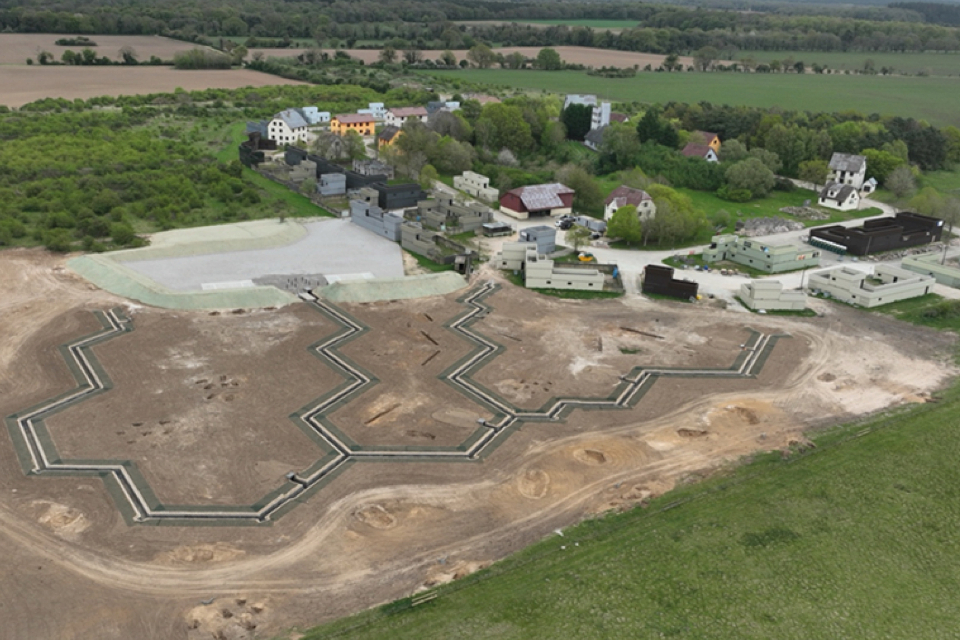
The new ground includes extensive trench networks, fighting positions, covered command posts, protected shelters, bunkers, observation points, firing platforms and vehicle positions.
Engineers built the systems into the existing training estate rather than onto separate sites, so units can move between urban and entrenched rural fighting inside a single exercise.
“These projects demonstrate our continued investment in the Defence Training Estate and our commitment to ensuring the armed forces have access to the infrastructure they need to train effectively,” said Brigadier Gavin Hatcher, Head of Overseas and Training Region at the Defence Infrastructure Organisation. Hatcher said the facilities reflect the changing character of warfare.
Colonel William Robinson, Deputy Chief of Staff at the Land Warfare Centre, framed the work as a response to how conflict has shifted. “The character of conflict continues to evolve, and it is essential that our training environments evolve alongside it,” Robinson said.
He added that the systems support tactical skills, decision-making and battlefield awareness in representative conditions.
Knights Brown Construction, 5C Consulting and Land Sculpture Civils supported the Norfolk build.
Why trenches are back
Two decades of British Army training centred on Afghanistan and Iraq, where the problems were patrols, compounds and improvised explosives rather than fixed lines.
Russia’s invasion of Ukraine reversed that. Both armies dug fortification networks across hundreds of miles of front, and the resulting attritional fighting pushed trench warfare back onto the UK training agenda.
The British Army has been rebuilding the skill set for several years. The MOD went to market for three new trench warfare training facilities in 2023, with STANTA, Salisbury Plain and Caerwent Training Area in Monmouthshire among the sites.
Sennybridge Training Area, home of the infantry battle school, laid roughly 300 metres of refurbished trenches built in the style used by Russian and Ukrainian troops. British instructors have also taught trench construction and trench fighting to Ukrainian volunteers under Operation Interflex, the multinational training mission run in the UK.
The £4.4 million sits inside a far larger spending programme. The Defence Investment Plan, published at the end of June, sets out £298 billion of defence investment over four years and commits the UK to spending 2.7% of GDP on core NATO defence from 2027-28, rising to 3.5% by 2035.
The government describes the plan as moving the UK towards warfighting readiness. Its publication followed the resignations of Defence Secretary John Healey and Armed Forces Minister Al Carns in early June over an earlier version of the plan and the funding behind it.
Trench construction is a rounding error against £298 billion. What it does signal is that the Army is now preparing troops to hold and assault fixed positions on a European battlefield, a scenario the UK spent 30 years treating as history.