Read: Starmer’s farewell message

Key Points
- Keir Starmer published a farewell message on 5 July 2026 defending his two-year record.
- This includes an 82% fall in net migration, six interest rate cuts and £360 billion in private investment.
- Starmer reaffirmed that he is now passing the torch to the next Prime Minister.
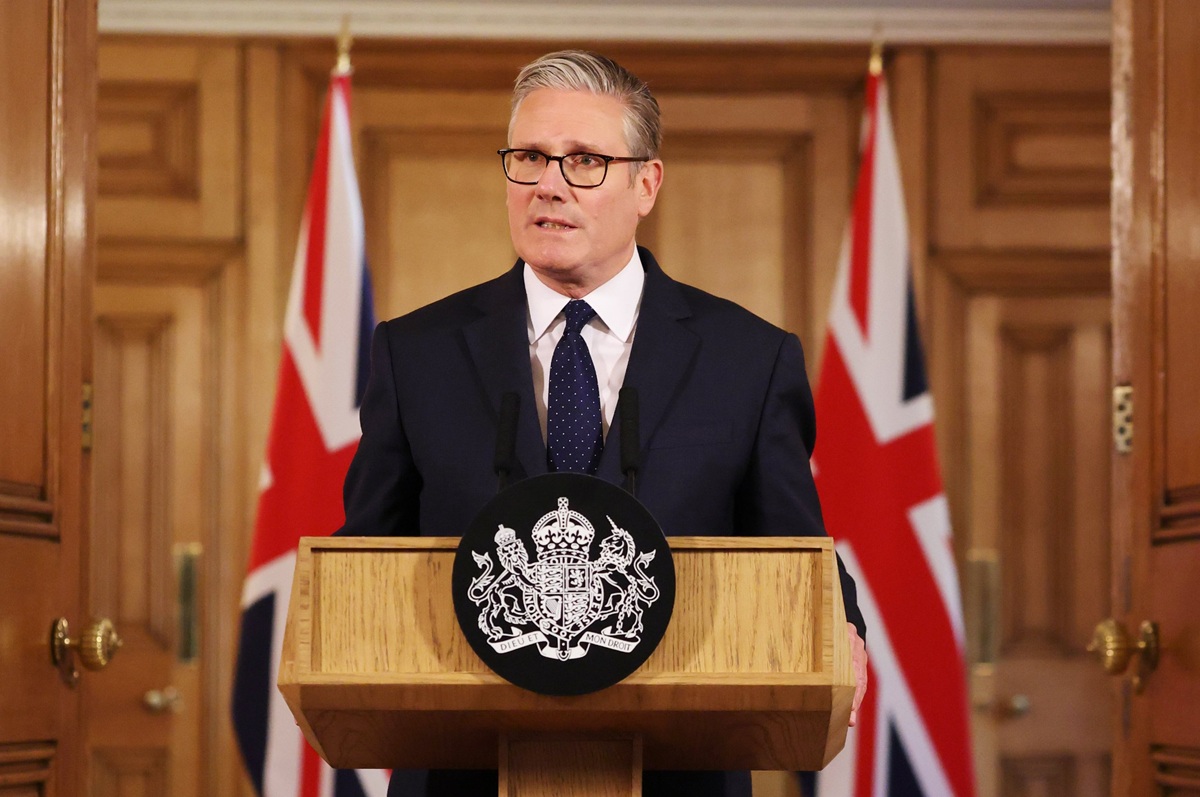
Prime Minister Keir Starmer published a farewell message on Sunday (5 July), setting out his government’s record over two years in office before handing power to his successor.
Starmer, who resigned in mid-June, said his most basic responsibility as Prime Minister was to leave the country in a better place than he found it – a test he said his government passed.
He said net migration fell from a peak of nearly a million under the Conservatives to 171,000, a drop of 82%, while small boat crossings fell 37% over the year and the asylum backlog shrank alongside declining hotel use. He added that the NHS was on track to cut waiting times at the fastest rate in its history, with the shortest cancer diagnosis times on record.
On household finances, Starmer said cuts to childcare costs saved working parents an average of £8,000 a year, and that child poverty was set to fall by over half a million – a figure he described as a record for a single term of government. He also pointed to a further £15 billion invested in defence in the week before his departure.
On the economy, Starmer said Britain was the fastest-growing economy in the G7 at the start of 2026, with six interest rate cuts since the election, stable inflation despite the conflict in Iran, and over £360 billion in private investment attracted into the country. He said over half of all European venture capital investment in technology came into Britain, and that government borrowing was on track to fall faster than any peer nation.
You can read the statement in full below.
Starmer’s farewell message
I have always felt that the most basic responsibility of being Prime Minister is to leave the country in a better place than when you found it. And as I reflect today, not just on two years in this role, but also what I will shortly pass on to my successor, I am proud that my Government achieved that.
Of course, some people will dispute this – that’s politics.
But our record speaks for itself.
The NHS is now on track to cut waiting times at the fastest rate in its history, with the shortest cancer diagnosis times on record. Net migration has fallen from a high of nearly 1 million under the Tories, to just 171,000 now – a fall of 82%. The asylum backlog has been slashed, hotel use is falling and the number of small boat crossings this year is also down by 37%.
We have slashed the cost of childcare, saving working parents an average of £8000 a year. Child poverty is set to come down by over half a million – a record for one-term of Government. Meanwhile, last week we invested a further £15bn in our defence, ending the shameful period of Tory austerity for our armed forces.
As I’ve set out in previous posts, when weighing up this record, it’s always helpful to remember what we inherited two years ago.
People genuinely did not think it could be done.
They thought we would have to make a sharp choice – increase public spending and weaken the public finances; or make cuts to restore credibility at the expense of repairing our public services.
This, of course, is the warped logic of austerity that held Britain in a vice-like intellectual grip for the whole period of Tory rule.
But I am pleased to say that Britain is now free from it.
We have shown a different way to fix Britain’s problems. Not without difficulty, not without hard choices – that is the nature of government. But the Government has demonstrated a distinctive and clearly social democratic approach to challenging economic circumstances. Labour can govern in tough times without compromising the strength of the economy.
Again, this last point will be disputed. But again, the results speak for themselves.
Yes, the economy isn’t booming, the global circumstances are not favourable to that. Nonetheless, we are doing better than our peers. Britain was the fastest growing economy in the G7 throughout the start of this year. The cost of borrowing for businesses, families and homeowners has come down significantly, with six interest cuts since the election. Inflation remains stable, despite the pressures of the conflict in Iran. We have struck transformative trade deals with the EU, the US, India, South Korea and the Gulf States. We have attracted over £360bn worth of private investment into the country, with over half of all European venture capital investment in technology coming into Britain. Government borrowing is on track to come down quicker than any of our peers. And every single month we have been in power, wages have risen for working people.
I am proud of that record.
It was always the plan to confront the toughest decisions early in the political cycle. The reason was simple: we needed to get Britain moving forward as quickly as possible.
Equally, it was always the plan that the benefits would start to be visible now.
On growth in particular, we chose a formula that would build a more secure, long-term foundation.
We chose stable public finances, rather than short-term giveaways.
We chose fiscal rules that allowed for long-term, supply-boosting infrastructure investment, on nuclear energy for example.
We chose planning reform to make it easier to build.
We chose industrial strategy to give businesses a clear steer on Britain’s economic future.
We chose to build a world-leading artificial intelligence industry, because we know it is vital for Britain’s long-term security.
This may not be flashy, but it absolutely fulfils the criteria of leaving Britain in a better place.
However, perhaps less obvious is the notion that it was also the plan that our defining Labour purpose would start to shine through more clearly as the Parliament progressed too.
Some people might find that a strange thing to say. And I freely admit that one of the failings of my Government has been our struggle to boil the good work we have done into a simple and accessible vision for Britain’s future.
However, in truth, I always felt this would be hard in the first phase of the Government – the sheer weight and scope of Britain’s problems mitigate against that.
After all, it is all very well picking one of Britain’s challenges as your animating cause – be that the NHS, our security, the cost of living, growth, inequality, poverty, state reform, technology, crime and so on. But every one of them needs Prime Ministerial attention and every one of them is vital for the success of our country. That is why, when we drew up our various strategies and missions, we always tried to find a balance that allowed for breadth as well focus.
Nonetheless, across all these areas, I have been guided by a single impulse: opportunity for our children.
You can see it in so many of the significant investments we have made – decisions all taken against a backdrop of tight public finances and a myriad of competing needs. But it is there in our investment in childcare. In our ending of the two-child benefit limit. In extending free school meals. In apprenticeships. In the youth guarantee. In special educational needs. In new nurseries, breakfast clubs and technical colleges. In our signal reforms to housebuilding, renting and worker rights – the key ingredients of aspiration: good work and a secure home.
These are not just one-off policies. Any investment in a child, particularly in their early years, has the possibility of paying off for an entire lifetime.
But in a society that must confront the politics of online division, I also believe this is a cause that will unite the country. It is more than a shared value, it’s a British ideal. We all want a country where everyone, no matter their background, feels they are respected for who they are. And we all want a country where children can go as far as their talent and effort will take them.
This is Labour at its best. And so while I have absolutely no intention of offering up advice for my successor, on this one issue I will break that vow: this is a cause they should take up as their own.
Talking of Labour, I should also say I am extremely proud of the changes my leadership has brought to the party.
It feels like a long time ago now that I made my first speech as leader, during lockdown, from the comfort of my own lounge – an example I hope none of my successors ever have to follow. And one of the reasons it feels longer is that the Labour Party of 2020 is unrecognisable from the party of Government it is today.
Indeed, as I said in my resignation speech two weeks ago, the party back then was politically, financially and morally bankrupt. The Tories were registering over 50% in the polls. Party morale was on the floor. And, most shamefully of all, Labour was on its way to being reprimanded by the Equalities and Human Rights Commission (EHRC) for institutional antisemitism.
Whatever anybody feels about the Government’s record, to have turned this around in one political cycle is an achievement absolutely nobody thought possible back in 2020. Even the people who voted for me and wished me well did not think it could be done.
And it was hard. It took a lot of courage, from a lot of people, most of whom received nothing like the credit that I did. That is a wider point: all the progress we made as a party belongs not just to the politicians, but to everyone who believed in the possibility of change and helped make it happen. But on antisemitism this is especially true.
And so I will never forget the moment of pride we felt in early 2023 when the EHRC took us out of special measures and commended the actions we took. Indeed, in some ways it remains the proudest and most important achievement of all.
Because, at the end of the day, the Labour Party is the vehicle for social justice in this country. It can be a frustrating vehicle – we certainly all feel that at times. But remove it and the forces of reaction, conservatism and grievance are free to turn Britain against itself unhindered.
There is always some truth to that sweeping statement, but right now it feels a more urgent fight – a battle for the soul of the nation, as I have said elsewhere. It is a fight my successor must now lead and I wish them the very best in their endeavours. It is vital they succeed and they will do so with a strong foundation to build upon.
A Britain where young renters now have a much more secure basecamp for their aspiration.
Where poorer children no longer go to school hungry, their minds now free to learn and wonder without fear.
Where young people on apprenticeships can now have confidence that their country truly values their skills.
And where millions of working class people – people like my sister, a care worker – now have better pay in their pockets and better rights in their workplaces.
When I think about passing the torch on to the next Prime Minister, those are the people I think about.
This was their Government.
And Britain is now a stronger and fairer country for them.
Keir.