The Oxford-Cambridge corridor is now worth £143 billion and is hiring 40% faster than the rest of the country – the government just opened a £250 million station to help feed it

Key Points
- Cambridge South station opens to passengers 28 June 2026
- Backed by £250 million of government funding
- Up to nine trains an hour; 1.8 million passengers expected yearly
- Cuts London-to-campus journey to one 45-minute direct train
- First station to carry Great British Railways branding
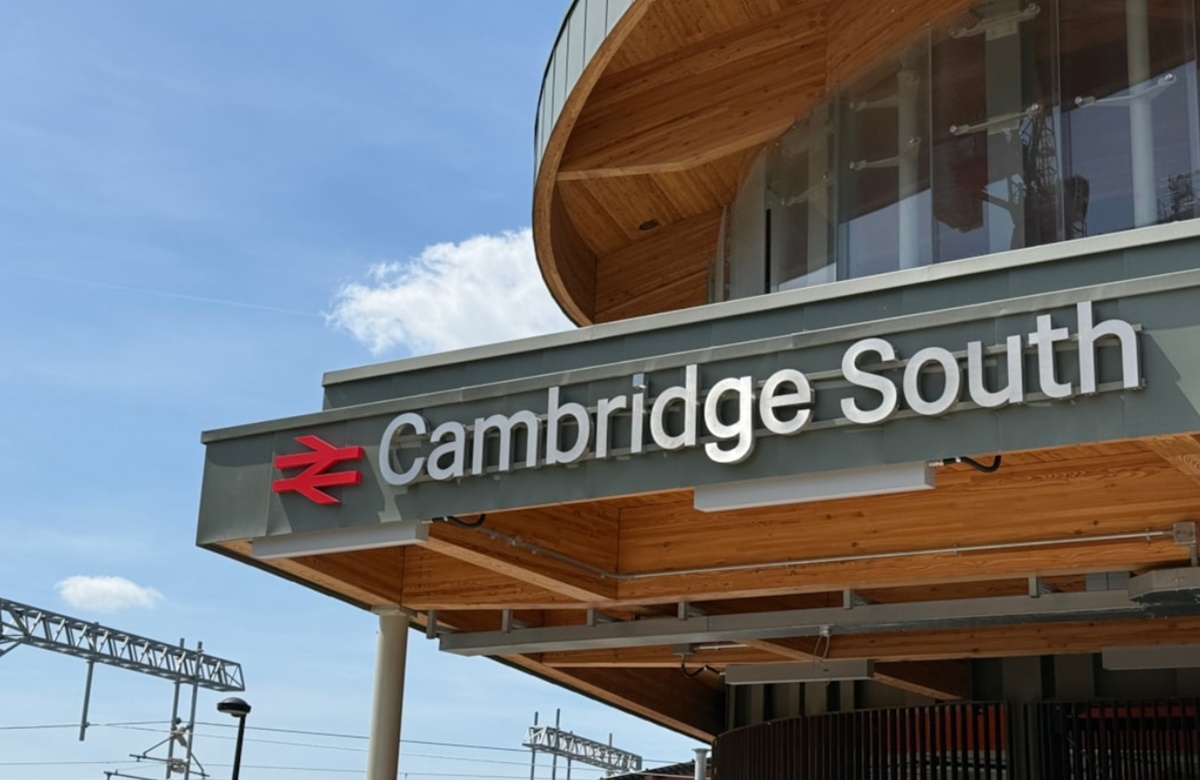
Cambridge South station opens to passengers on Sunday (28 June), delivering a direct rail link to Europe’s largest biomedical campus following £250 million of government funding.
The Department for Transport confirmed the station will welcome around 1.8 million passengers a year, with up to nine trains an hour connecting passengers to Cambridge city centre and beyond.
Services to London, Birmingham, Stansted Airport and international rail services via St Pancras will also call at the station, with up to 20 services stopping at Cambridge South in peak hours.
Trains operated by Greater Anglia, Great Northern and Thameslink CrossCountry are expected to serve the station from day one.
The station directly serves Cambridge Biomedical Campus, which houses science facilities, NHS hospitals and business premises.
The campus contributes £4.7 billion annually to the UK economy, with every 10 jobs on the campus supporting a further 10 jobs across the country. Around 40,000 people visit the campus each day, and it employs over 20,000 staff.
Before the station opened, a passenger travelling from London King’s Cross to the campus needed to take a train, a bus and walk, in a journey taking over an hour. The new station reduces that to a single 45-minute direct train from London.
Transport Secretary Heidi Alexander said the £250 million investment cuts journey times and improves access to jobs. She said the station connects passengers to London, Birmingham, Stansted and beyond, and described the project as Great British Railways in action.
Jamie Burles, Managing Director for GBR Anglia, said the opening marks the completion of a new gateway for the 1.8 million people expected to use the station every year.
He said the station provides a more sustainable travel option for workers and visitors at the biomedical campus and for local residents, supporting regional growth and connection to major cities and transport hubs.
Shaun Grady, Chair of AstraZeneca UK, said the company and local partners had supported Cambridge South from the start.
He said the station would be transformative for the campus and the wider city, helping colleagues and visitors travel to Cambridge for appointments, to London for meetings and to Stansted for flights.
Cambridge South is notably the first new station to carry Great British Railways branding, which the department says offers clearer information and stations that are simpler to move around.
The station integrates with the existing Hobson’s Park nature reserve. Its green roof includes a wildflower meadow and a rainwater catchment system that stores and slowly discharges rainwater back into the environment and a nearby brook.
Design and construction efficiencies have reduced the station’s carbon footprint by over 22%.
The station also connects to the local cycle network with 1,000 cycle spaces and blue badge bays, and sits next to the guided busway system, providing access from local park and ride facilities and the city centre.
The Oxford-Cambridge corridor has a combined value of £143 billion, with employment rising 40% faster than elsewhere in the country and around 30% of jobs in knowledge-intensive sectors, almost triple the national average.