What to expect from UK interest rates for the rest of this year


Key Points
- The Bank of England is expected to hold its base rate at 3.75% on Thursday 18 June 2026, likely in a 7-2 vote, according to RSM.
- Markets are pricing in as many as two rate rises this year as an oil shock from the Iran conflict drives a hawkish split on the committee.
- The energy price cap will rise 13% in July, with tracker and SVR mortgages directly exposed to any base rate move.
- Weak data, including 5% unemployment and sub-50 services PMI, supports a "wait and see" approach.
- RSM forecasts rates frozen through 2026 followed by three cuts in 2027, though near-term risks favour a summer hike.
The Bank of England is expected to hold its base rate at 3.75% when the Monetary Policy Committee meets this Thursday (18 June).
But financial markets are now pricing in as many as two rate rises before the end of the year as an oil shock tied to the Iran conflict reopens divisions on the committee, according to analysis from advisory firm RSM.
The group expects the committee to leave rates unchanged, most likely in a 7-2 vote, but warns that the split among policymakers is widening.
Two members could vote for an immediate hike, the firm said, with the Strait of Hormuz still closed and survey data pointing to sharply rising underlying price pressures.
The MPC’s most recent decision, on 30 April, was an 8-1 hold, with one member already breaking ranks to vote for an increase to 4%.
Oil and gas prices remain well above their pre-crisis levels even after crude slipped below $90 a barrel on hopes of a deal to reopen the strait, leaving what RSM describes as a significant amount of further energy inflation still working through the system.
For households, the most immediate hit is already confirmed. The energy price cap is set to rise by 13% in July, RSM noted, before its next adjustment in the fourth quarter.
The base rate itself feeds directly into tracker and standard variable rate mortgages, while fixed deals are priced off swap rates that move on where markets expect rates to head, meaning mortgage costs can climb before any actual decision is made.
Much of the recent economic data has given the committee cover to wait.
The unemployment rate rose to 5% in March, pay growth came in softer than expected, and services inflation slowed to 3.2%, below the Bank’s own forecast. The services PMI also dropped to 49.3, its first sub-50 reading since April 2025, suggesting the economy is cooling.
The counterargument is that the energy shock could still feed into wages and prices.
Survey data suggests firms are planning aggressive price increases to protect margins, and households’ long-term inflation expectations rose to 4% in May. RSM said the decisive question for the committee is whether evidence of second-round effects begins to emerge.
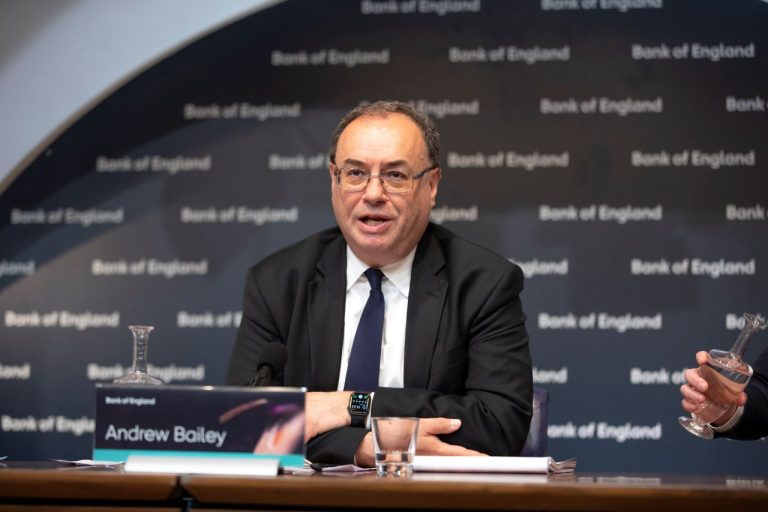
Governor Andrew Bailey is seen as the key swing voter and has signalled a tolerance for temporarily above-target inflation to support the wider economy.
RSM expects the Bank to “talk the talk” on hikes without acting on them, keeping a “ready to act” message in its guidance while leaving rates on hold.
Looking further ahead, RSM forecasts that the Bank will keep rates frozen for the rest of 2026 before cutting three times in 2027, as inflation falls back and a weaker labour market opens up spare capacity in the economy.
The firm cautioned, however, that the near-term risks remain clearly tilted towards at least one rate rise over the summer.