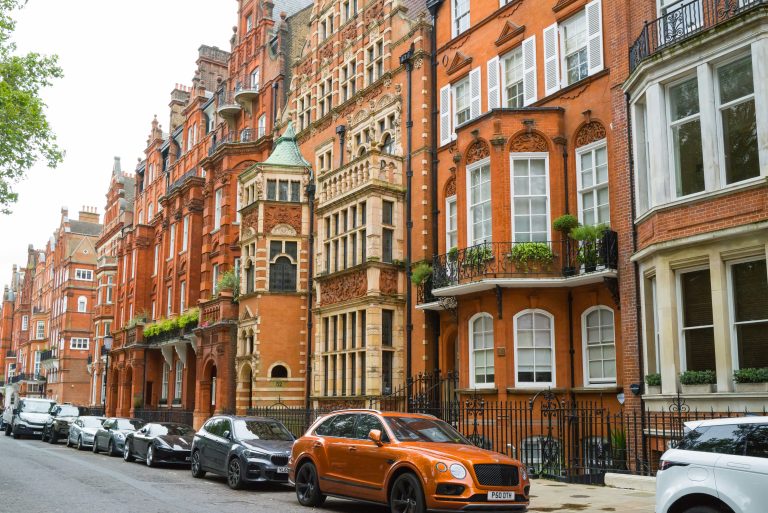
London think tank pushes to axe Council Tax and Stamp Duty


Key Points
- Centre for London published Delivering the Homes London Needs on 19 May 2026, calling for Council Tax and Stamp Duty to be replaced with a single Proportional Property Tax
- The reform would release an extra 79,000 homes a year in London and raise £912 million annually in surplus revenue
- The new tax would carry an average effective rate of 0.39% and raise £6.8 billion a year for local and regional government
- The £912 million surplus would fund 4,100 extra social rented homes annually, more than tripling recent delivery rates of 1,148 a year
- The think tank frames London's housing crisis as a "winner-takes-all" problem in which wealthier owner-occupiers have captured a disproportionate share of stock
A London think tank says scrapping Council Tax and Stamp Duty would free up an extra 79,000 homes a year in the capital.
Centre for London, an independent research and policy organisation focused on the capital, set out the proposal in a 136-page report, Delivering the Homes London Needs: What Will It Take?, published on Tuesday (19 May).
The report argues that London’s housing crisis is no longer just a question of supply but a “winner-takes-all” problem in which wealthier owner-occupiers have captured a disproportionate share of the city’s existing stock.
The 79,000 figure refers to additional properties that would circulate through the market each year once Stamp Duty is removed from ordinary moves, freeing households who currently stay put to avoid the transaction charge.
A 2021 analysis cited in the report estimated the shift would release 47,000 one and two bedroom homes, 24,000 family-sized three or four bedroom homes, and 8,000 larger properties.
The authors modelled the impact using Land Registry data on 2.7 million London property transactions, finding that a Proportional Property Tax with an average effective rate of 0.39% would raise £6.8 billion a year for local and regional government.
Of that total, £2.3 billion would flow to the Greater London Authority and £4.5 billion to London boroughs, leaving £912 million in additional revenue annually after replacing Council Tax and the GLA precept.
That surplus would finance 4,100 extra social rented homes a year at the current benchmark grant rate of £220,000 per home. Social rented completions in London averaged 1,148 a year over the three financial years to 2022/23, meaning the new model would more than triple recent delivery rates.
Over a decade, the report sets a target of 106,000 social and affordable homes funded through the reformed tax.
Under the proposal, liability for the new tax would sit with the property owner rather than the occupier.
Private landlords would be treated as running a rental business and would deduct the charge against profits, which the authors said would help retain well-run private rented stock.
The report describes the abolition of Stamp Duty as removing “a major transaction friction” that gums up the efficient distribution of stock across the city.
London housing delivery collapsed in 2025 to its lowest level in over a decade, the report notes.
Average house prices in the capital now stand at 12 times typical earnings, one third of London’s children live in poverty after housing costs, and homelessness costs the public purse £5.5 million a day.
The recommendation is one of three pillars of a wider package, alongside a new municipal Build-to-Rent model, stronger council powers to acquire long-term empty homes, and a Greater London Housing Fund to insulate councils and housing associations from market cycles.
Centre for London wants the Government, rather than the Mayor of London, to legislate for the new tax, with revenues partially devolved to City Hall and boroughs.
“London can build more homes, and it must,” the group said. “But if housing policy only focuses on increasing headline supply numbers and beating delivery targets, we risk missing the real problem.”