The UK just built a database to figure out which jobs will survive AI


Key Points
- Skills England launched the UK Standard Skills Classification on 30 April, a national framework mapping 3,343 occupational skills across 22 skill domains.
- The classification was built using OpenAI text embeddings and Large Language Models, validated against a database of 8 million UK job adverts.
- Skills England admitted in its development report that the AI tools used were "not entirely reliable" and required manual expert cleanup.
- LinkedIn refused to supply data, forcing the team to build the database from public sources, Ofqual qualifications and Skills England Occupational Standards.
- The UK Skills Explorer is live in public beta at skillsclassification.org and is free to use under an Open Government Licence.
After two years of development, Skills England has launched an AI-built database that maps every job in the UK to 3,343 separate skills, and anyone can search it for free.
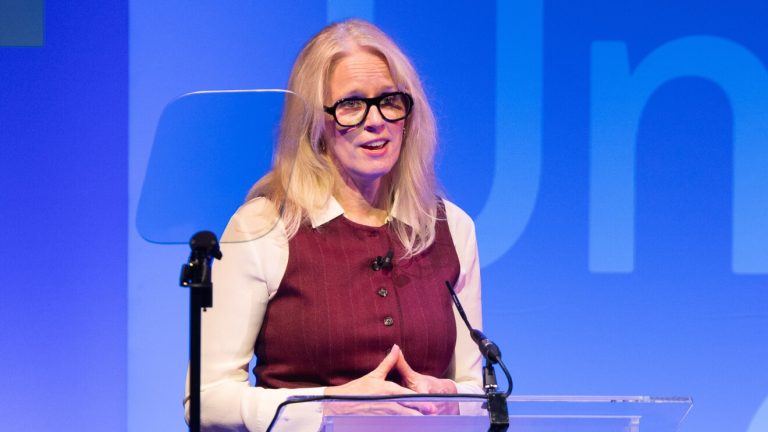
The tool, called the UK Standard Skills Classification (SSC), was officially launched at a special event at the Shard on 30 April. Built by the University of Warwick’s Institute for Employment Research and the University of Sheffield in partnership with Omnifolio, on behalf of Skills England, the SSC is the first standardised national skills framework in British history.
It sorts the entire UK labour market into 22 skill domains, 106 skill areas, 607 skill groups, and 3,343 individual occupational skills, then links those to 13 transferable “core skills” the data suggests almost every UK worker needs. The public-facing front end is called the UK Skills Explorer, and it is live now in public beta at skillsclassification.org.
It was built using AI, and the government admits it isn’t perfect
The most interesting thing about the SSC is how it was actually built.
According to the development report published by Skills England, the classification was constructed using OpenAI text embeddings and Large Language Model evaluations to validate, deduplicate, and standardise multiple input datasets, with human expert review layered on top.
That is the first time a national statistical product of this scale in the UK has been openly built using commercial AI tools as part of the core methodology.
The validation work used a database of eight million UK job adverts to check the AI output against what employers actually ask for.
Skills England was unusually candid in its research report that the AI tools used were “not entirely reliable”, noting struggles with data tagging and inconsistent grammar that required manual cleanup.
The Department for Work and Pensions has now started a pilot to test whether the SSC can be used to generate standardised skills profiles from real claimant CVs.
LinkedIn refused to play ball
One of the more eyebrow-raising lines in the development report relates to LinkedIn.
Skills England asked the Microsoft-owned professional network to supply data to help build out the knowledge concept library, but LinkedIn declined to provide access at the level required.
The team had to build the database without arguably the single largest source of UK career data in existence.
Instead, they pulled from publicly available sources, the Skills England Occupational Standards, Ofqual registered qualifications, the Higher Education Coding of Subjects, and the 8 million job advert database.
What you can actually do with it
Open the UK Skills Explorer and you can type in a job title, a skill, a qualification, or a knowledge area, and the tool will pull up everything in the database connected to it.
Search “software developer,” and you get the full task list, the linked core skills, the relevant qualifications, and crucially, the other occupations those skills transfer to.
That transferability piece is the part most likely to matter to ordinary UK workers.
The SSC builds in a concept called “time to become competent”, which estimates how long it would take a competent person in one role to become competent in another, based on the overlap of their skills.
For a UK worker worried about whether AI or automation might come for their job, that is the closest thing yet to a publicly available national tool for figuring out where to jump next, and how long the jump would take.
Who Skills England thinks will use it
The pitch from Phil Smith, Chair of Skills England, is that the SSC is a common language for skills, and that it will benefit four audiences.
Employers can use it to assess workforce capability, identify gaps, and run skills-based recruitment.
Training providers can match curriculum design to actual labour market demand. Local and Mayoral Combined Authorities can forecast regional skills shortages.
Individual job seekers can identify which of their existing skills are transferable and which they would need to learn for a career change.
Peter Elias CBE, Professor of Employment Research at Warwick and the academic who led the project, said the SSC gives the UK its first “common and comprehensive language” for talking about skills.
Andy Dickerson, Professor at the University of Sheffield, framed it more bluntly: in an era of rapid AI and green transformation, the SSC is the “foundational infrastructure” for a more responsive British workforce.
Michael Englard, CEO of Skills Builder Partnership, called it “actionable intelligence” for employers, educators, and young people.
Alex Hall-Chen, Principal Policy Advisor at the Institute of Directors, said the framework represents “significant progress” towards clearer workforce planning.
Version 1.0 of the classification is live now under an Open Government Licence, meaning anyone, including private companies and competing platforms, can download and build on the underlying data.
A fuller final development report is due alongside an expanded release in spring 2026.