Forget Tesla – Britain’s quietly building its own self-driving champion

Key Points
- The UK Department for Business and Trade has signed an MoU with British AI scale-up Wayve on self-driving research.
- Wayve is valued at $8.6 billion after a $1.2 billion Series D round backed by Microsoft, Nvidia, SoftBank, Uber, Mercedes-Benz and Nissan.
- Wayve uses a vision-based, end-to-end AI system without HD maps, similar in philosophy to Tesla FSD but vehicle-agnostic.
- Wayve launches Level 4 robotaxi trials in London this year with Uber; Waymo is targeting a Q4 2026 driverless launch in the same city.
- The UK government estimates the self-driving sector could create 38,000 jobs and add £42 billion to the economy by 2035.
Britain just made it official: the country has a horse in the autonomous race, and it isn’t American.
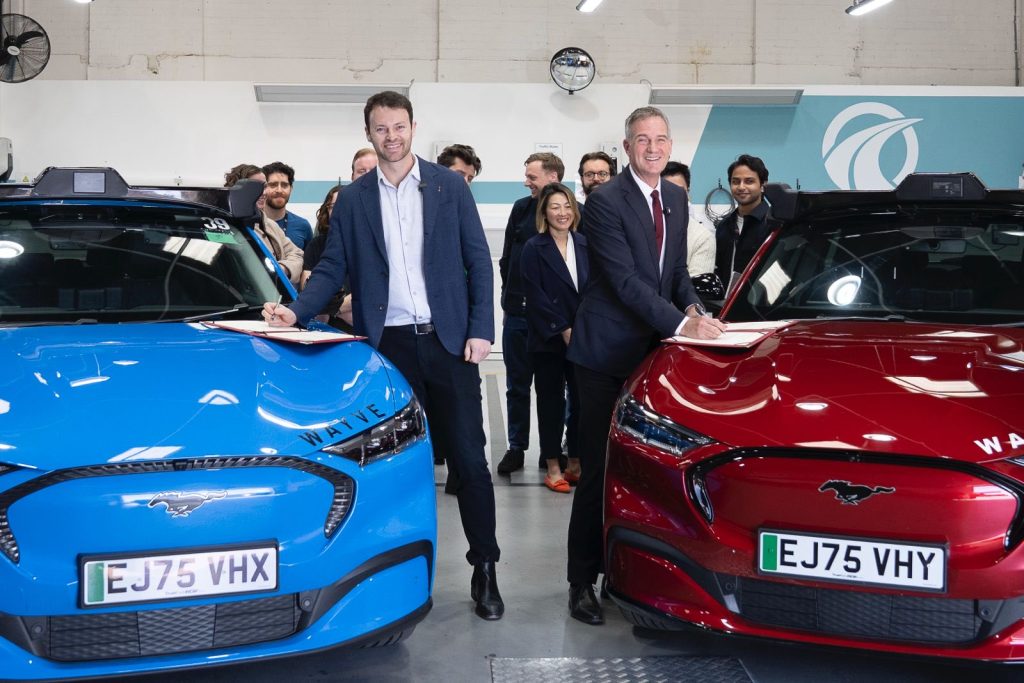
The Department for Business and Trade has signed a Memorandum of Understanding with Wayve, formally linking Whitehall to the London-based AI scale-up that’s been quietly turning itself into the UK’s answer to every Silicon Valley name in the self-driving game.
The deal commits both sides to joint research on safety assurance, large-scale simulation and the integration of full self-driving tech into production-ready vehicles.
If you’ve spent the last decade assuming the autonomous future would be branded Tesla, Waymo or Cruise, you might want to recalibrate.
Wayve was valued at $8.6 billion in February after a $1.2 billion Series D round, with Microsoft, Nvidia, SoftBank, Uber, Mercedes‑Benz, Stellantis and Nissan all writing cheques.
The British Business Bank, Baillie Gifford and Ontario Teachers’ Pension Plan piled in alongside them. That’s not a scrappy startup. That’s a contender.
The government just put its weight behind it
Business Secretary Peter Kyle framed the deal as proof that the government’s Modern Industrial Strategy is actually picking winners.
“This partnership with Wayve shows how government is backing high‑growth British scale‑ups through our Modern Industrial Strategy to turn world‑leading research into real‑world deployment,” Kyle said in the announcement.
Science and Technology Secretary Liz Kendall was less corporate about it, calling Wayve “a true British AI success story” and arguing the partnership will lock high-skilled tech and advanced manufacturing jobs into the UK rather than letting them drift offshore.
It seems Westminster has finally noticed that a handful of Cambridge machine-learning PhDs are quietly building something the rest of the world is now paying serious money to access.
How Wayve actually drives (and why it matters)
Here’s the part that might surprise you. Wayve’s tech doesn’t look like Waymo’s.
Waymo’s robotaxis are sensor cathedrals: 13 cameras, six radar units, four LiDAR pods and a roof rack that screams “experimental vehicle.” Each unit reportedly costs tens of thousands just to fit out.
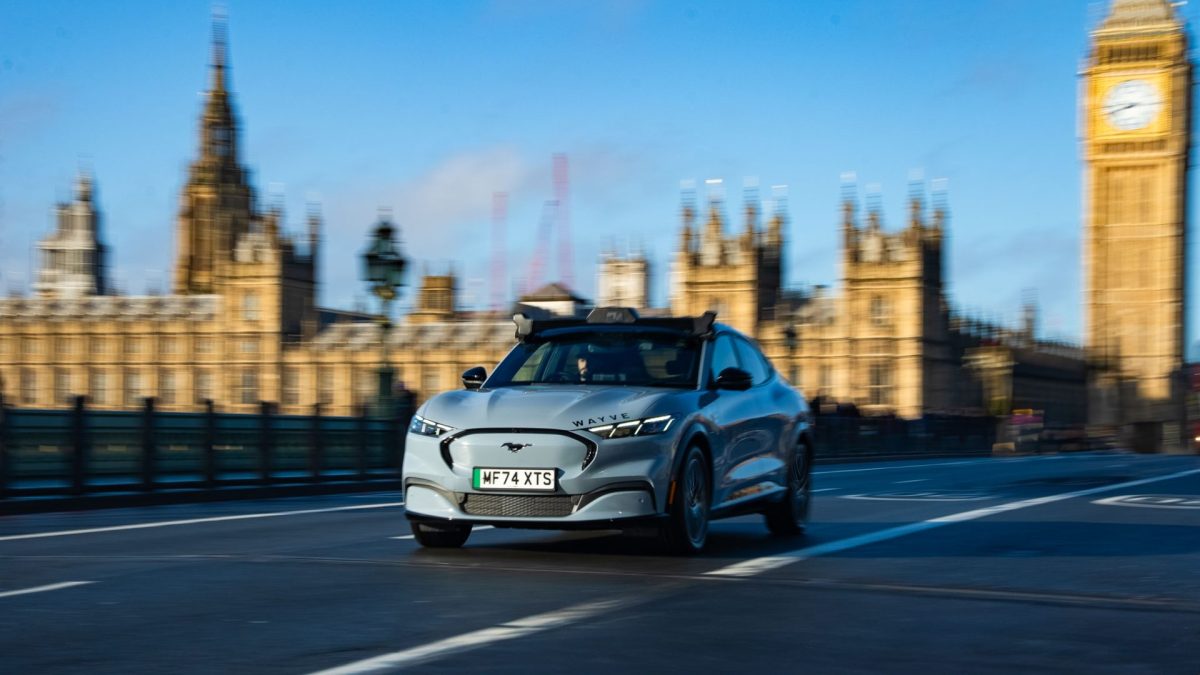
Wayve’s approach is the opposite. The company runs on end-to-end neural networks trained on vision data, with no high-definition maps and no hand-coded rules. The hardware? A handful of cameras, a compute box, and embedded sensors that already exist in modern vehicles.
According to CEO Alex Kendall, the camera kit on the company’s Ford Mustang Mach-E test vehicles runs to a few hundred dollars per car.
If that sounds familiar, it should. It’s broadly the same vision-first philosophy Tesla bet the farm on with FSD. Except Wayve isn’t trying to sell you a car. It’s trying to license its AI Driver into every car, regardless of badge.
That’s the strategic chasm. Tesla wants to be the platform and the manufacturer. Waymo wants to operate the fleet. Wayve wants to be the software layer underneath all of them.
Why the UK is going all-in
The government has reasons that aren’t just patriotic. By its own estimate, the self-driving sector could create 38,000 jobs and add £42 billion to the UK economy by 2035.
It’s also rewritten the rules to make sure that growth happens on UK roads. The Automated Vehicles Act 2024 passed last year, and Whitehall has fast-tracked commercial self-driving passenger pilots to spring 2026. That’s the policy version of rolling out the red carpet.
Wayve has used it. The company is launching Level 4 robotaxi trials in London with Uber this year, and a Tokyo pilot with Nissan is scheduled for late 2026 using the Nissan LEAF.
Here’s the catch. Wayve isn’t the only player eyeing the UK capital as its European launchpad.
Waymo, valued at $126 billion and dominant in San Francisco and Phoenix, is targeting a Q4 2026 fully driverless launch in London. Both companies are now competing in the same city under the same regulatory framework, which means London is about to become the world’s most consequential autonomous driving testbed.
For Wayve, this is home-court advantage. The company knows UK roads in a way that mapping-heavy competitors don’t, and its mapless system was designed to handle exactly the kind of medieval street layouts, double-decker buses, jaywalkers and rogue cyclists that make London a robotaxi nightmare for everyone else. One Wayve demonstration reportedly handled a runaway military horse. Try training a HD map for that.
A world leader
Britain doesn’t get to play in many technology super-leagues right now. AI hyperscalers, no. Chip foundries, no. EV manufacturing at scale, also no.
But on autonomous vehicles, the country has something rare: a homegrown, multi-billion-dollar leader with the right tech philosophy, the right investor list, and the right government on its side at the right moment.
The MoU signed today doesn’t change physics. It doesn’t write a single line of code. But it does send a clear signal to anyone watching: when London’s roads become the global proving ground in 2026, Britain has picked its team. And the team’s name is Wayve.