The cheapest and most expensive places to rent a room in London

Key Points
- The average cost of renting a room in a London flatshare has soared in the last six years, now sitting at almost £1,000.
- Just five London postcodes still offer rooms to rent under £800, with the cheapest areas including East Ham, Manor Park, and Chingford.
- Knightsbridge, Kensington and Chelsea, and Soho rank among the most expensive places to rent a room, with prices reaching up to £1,572 per month.
- SpareRoom director Matt Hutchinson has said there is "no such thing as cheap housing in London now", saying even the cheapest flatshares are out of reach for many.
London rents have soared over the past six years, with many turning to flat shares as the only affordable option for them to live within the bounds of the city in which they work.
The price of room rents has also risen, however, putting more stress on the budgets of people working in the capital.
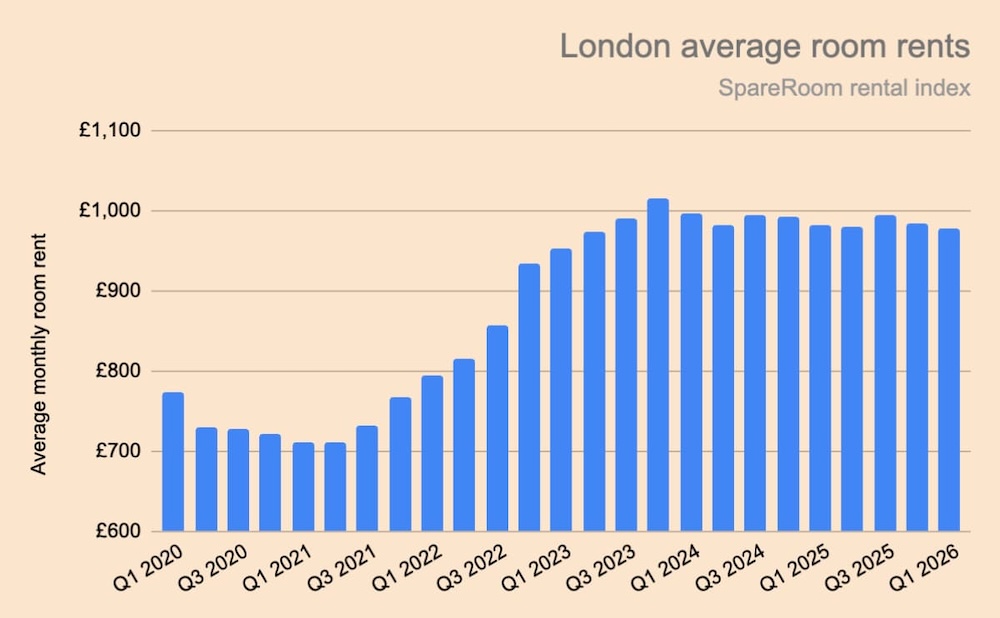
According to data from UK flatshare site SpareRoom, the average cost of renting a room in a city flatshare was £773 per month in the first quarter of 2020, and 81 London postcodes had an average room rental price under £800 per month. 50 of those postcodes even had an average monthly room rental price below £700.
The most recent data shows that since then, room rents have risen significantly. The average price of a room in a city flatshare was £978 per month in Q1 2026, a figure SpareRoom notes is “way above the ceiling of affordability for many people’.
Additionally, the number of areas where average room rents were £800 or below has dropped off precipitously. In the first quarter of 2026, just five London postcodes had average room rents below £800 per month.
“UK room rents have been stabilising in recent quarters, and while that’s certainly better than rising rents, it doesn’t mean they’re affordable. Huge demand after the pandemic caused rents to soar, and they’ve remained stubbornly high since,” said SpareRoom Director Matt Hutchinson.
The graph below shows how much the cost of renting a room in London has increased over the past six years.
“Years of intense demand on London’s limited rental stock has inflated prices and made cheap rents all too scarce,” Hutchinson said.
“Falling demand and slightly increased supply points to more renters being priced out of inner London, which is why we’re still seeing heightened demand in the suburbs and commuter belt.”
“In reality, there’s no such thing as cheap housing in London now,” he said.
“If you do manage to find a room at £800 per month – and these are increasingly endangered – you’d still need to be earning a salary of £32,000 a year to afford the rent. This is over and above what many people in the capital earn, especially those just starting their careers.”
Below are the cheapest and most expensive postcodes for renting a room in a London flatshare, according to data from SpareRoom.
Cheapest postcodes to rent a room in London
Many of the cheapest postcodes for renters are based in East London or in the South East, relatively distant from the city centre.
East Ham is officially the cheapest place to rent a room, followed by postcodes in Manor Park and Chingford.
While five of the postcodes on this list are still offering average room rents of under £800 per month, this is a far cry from the more reasonable rates available to tenants six years ago.
| Postcode | Average Monthly Room Rent (Q1 2026) |
|---|---|
| E6 (East Ham) | £727 |
| E12 (Manor Park) | £731 |
| E4 (Chingford) | £764 |
| N18 (Upper Edmonton) | £774 |
| E7 (Forest Gate) | £781 |
| E10 (Leyton) | £803 |
| E13 (Plaistow) | £804 |
| SE12 (Lee) | £804 |
| SE28 (Thamesmead) | £809 |
| N9 (Lower Edmonton) | £815 |
Most expensive postcodes to rent a room in London
Unsuprisingly, many of the most expensive postcodes in which to rent a room in London are close to the city centre and affluent areas such as Mayfair, Kensington and Chelsea, and Soho.
The most expensive postcode was SW7 in Knightsbridge, where a room in a flatshare will cost you £1,572 on average. It is followed by W8 (Holland Park) and EC2 (Bishopsgate).
The cost of a room in these areas is closer to what a studio or one-bed flat would have been priced at in more reasonable areas six years ago, demonstrating just how much prices have risen in this short period.
| Postcode | Average Monthly Room Rent (Q1 2026) |
|---|---|
| SW7 (South Kensington/Knightsbridge) | £1,572 |
| W8 (Holland Park) | £1,528 |
| EC2 (Bishopsgate/Cheapside) | £1,485 |
| W1 (West End/Soho) | £1,446 |
| SW3 (Chelsea) | £1,306 |
| SW5 (Earl’s Court/West Brompton) | £1,294 |
| SW10 (West Brompton/Chelsea) | £1,276 |
| SW1 (Westminster/Belgravia/Pimlico) | £1,252 |
| W2 (Bayswater/Paddington) | £1,249 |
| WC1 (Bloomsbury/High Holborn) | £1,248 |
What the Renters’ Rights Act means for tenants in flatshares
While room rent prices might be rising closer to the record highs seen post pandemic, the introduction of the Renters’ Rights Act offers some consolation to those renting in England.
The new legislation, which took effect from 1 May 2026, introduces a raft of changes to the way tenancies work in the country, marking the biggest change to tenancy rules in 30 years.
Speaking to HotMinute, Hutchinson said the Renters’ Rights Act would provide renters with more protection against rogue landlords, better security in their occupancy, and more flexibility when their circumstances change.
“The end of Section 21 ‘no fault’ evictions means landlords now need a very good reason to ask tenants to leave,” Hutchinson told HotMinute.
“More security for tenants will empower them to challenge unfair rent increases or flag substandard conditions without fear of eviction.”
“There’s also more flexibility for renters. Fixed-term tenancies have now ceased to exist and, as standard, all tenancies will be periodic and rolling, meaning tenants won’t be tied into lengthy contracts and need only give two months’ notice at any time to move on,” he said.
“There will be no more bidding wars and landlords will only be allowed to increase rents once a year following a set procedure, with at least two months’ notice – and any increase must be in line with market rents. Tenants will be allowed to challenge what they believe to be unfair increases at a first-tier tribunal.”
Read our explainer about how the Renters’ Rights Act will impact tenants and landlords here.