Why the CEO of Google DeepMind thinks London beats Silicon Valley for tech talent
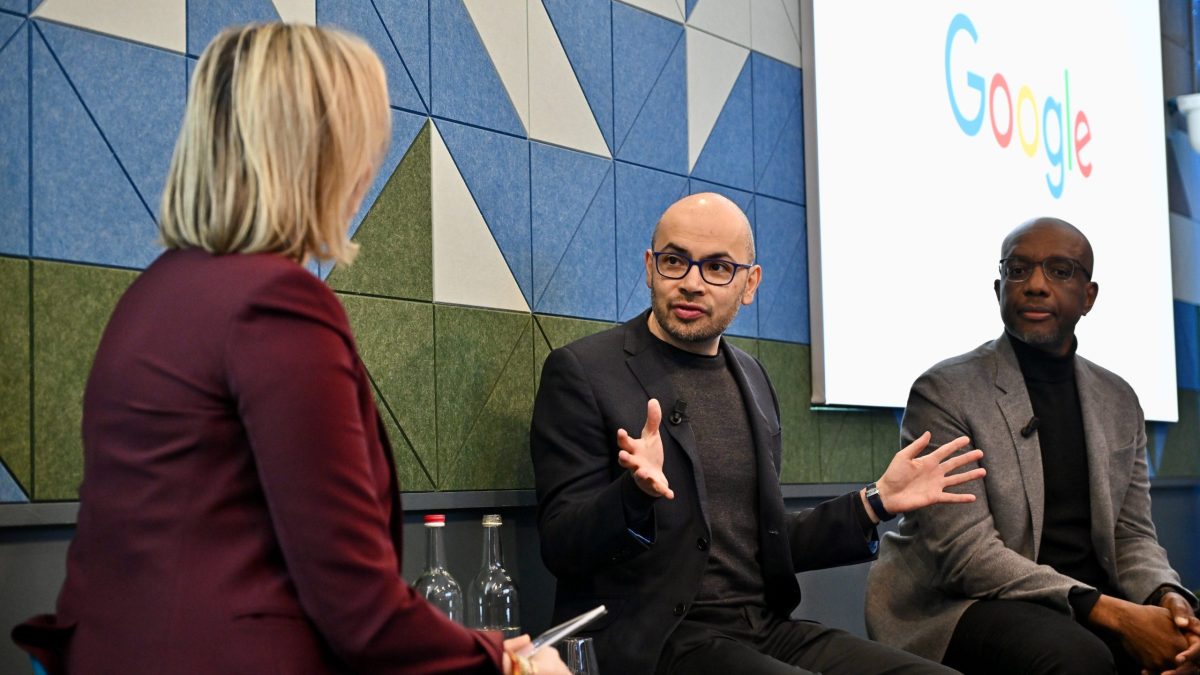

In the cutthroat race for AI supremacy, Silicon Valley has long been considered the undisputed capital of the world. But Demis Hassabis, co-founder and CEO of Google DeepMind, sees things differently.
In a wide-ranging new interview on The Twenty Minute VC podcast, Hassabis revealed why DeepMind, one of the most important AI research labs on the planet, deliberately stayed rooted in London rather than relocating to California, even after its $500 million acquisition by Google in 2014.
“DeepMind stayed in London because it is better for talent than Silicon Valley,” Hassabis said. “I saw London and the UK as having incredible talent from top universities like Cambridge, Oxford, Imperial and UCL.
“There is a deep heritage of scientific breakthroughs and world-class thinkers. There was less competition for that talent, which made it a huge structural advantage for building DeepMind.”
A bet on Britain’s brainpower
Hassabis co-founded DeepMind in 2010. At the time, the company was a scrappy startup with an audacious goal: to “solve intelligence” and use it to advance science and humanity, he said.
London wasn’t the obvious choice. Silicon Valley already had the venture capital, the network effects, and the cultural hype machine. Yet Hassabis, a Cambridge neuroscience PhD with a background in game AI, spotted something most others missed.
“I think what I saw in London when we started DeepMind as a place, and the UK in general and Europe to some degree, (is that) there’s incredible talent here,” he explained. “We’ve always had three or four of the top 10 universities in the world, with Cambridge and Oxford, Imperial and UCL, these kinds of universities. So we’re producing the envy of the world, really, these amazing graduates and PhD students.”
“We have incredible scientists here. We got rich heritage of that all the way from Turing and Hawking and Darwin (and) Newton. So you know we have this incredible history of scientific breakthroughs and having great thinkers.”
Crucially, Hassabis argued that this talent pool hadn’t yet been fully tapped for ambitious deep-tech startups.
“It just hadn’t been galvanised into an ambitious startup idea, a deep tech startup idea,” he said. “But I felt it was possible. And I felt that there was actually less competition here for that sort of talent. And we could even draw in the best talent from the top European universities.”
From London lab to global powerhouse
History has proved Hassabis right. DeepMind’s early breakthroughs, including AlphaGo (the first AI to defeat a world champion Go player in 2016) and AlphaFold (which solved the 50-year grand challenge of protein structure prediction, earning Hassabis a share of the 2024 Nobel Prize in Chemistry), were built largely by teams in London.
Today, Google DeepMind employs thousands of researchers across the globe, but its core research culture and many of its most critical teams remain anchored in the UK.
The lab has become a magnet for Europe’s top minds, and even some from the US, drawn by the mission, the heritage, and the relative lack of the cutthroat poaching wars that define Silicon Valley.
Top researchers command multimillion-dollar compensation packages in the Bay Area, where companies like OpenAI, Anthropic, Meta, and Google compete aggressively for the same handful of experts. Salaries for elite AI talent in Silicon Valley can exceed $1 million annually, including equity.
By comparison, London offers a form of ‘talent arbitrage’ – world-class researchers at a fraction of the cost, with fewer distractions from competing offers every few months.