3 global shocks in six years has the UK rethinking everything – here’s the new foreign policy
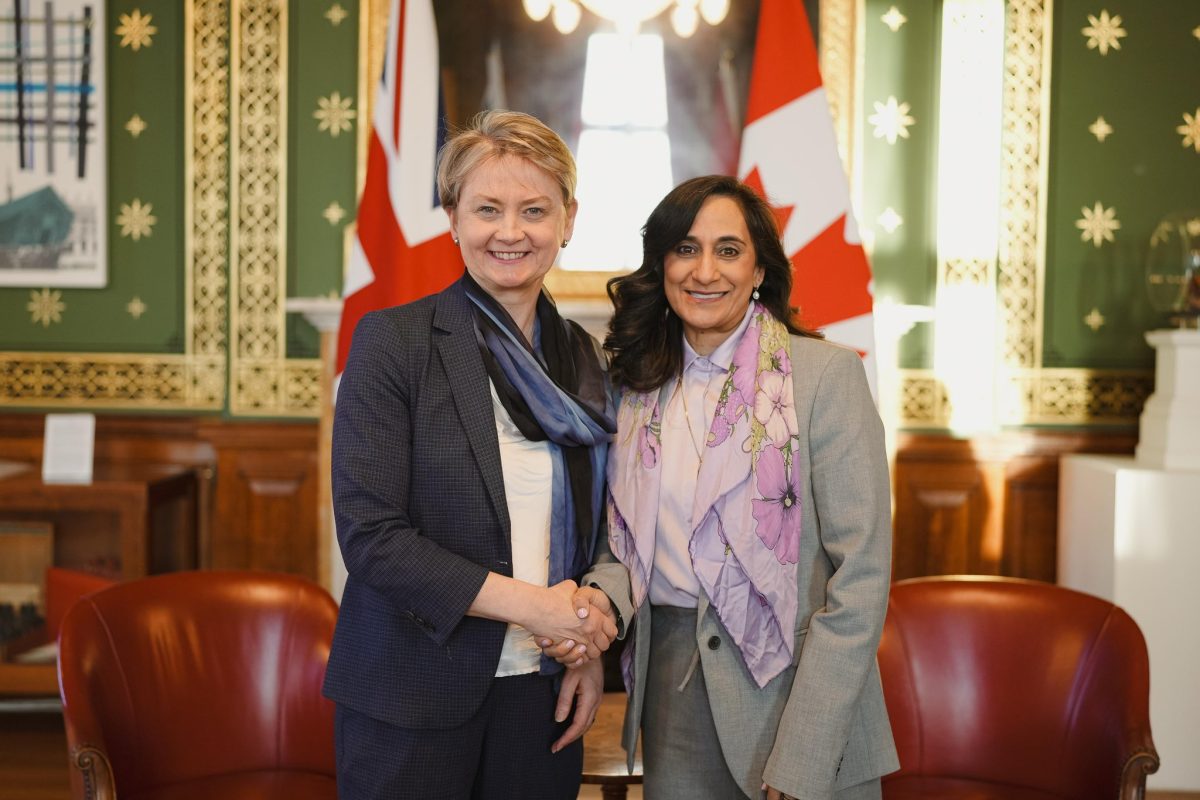

Foreign Secretary Yvette Cooper warns that Britain can no longer treat international crises as distant events. Three major global shocks in just six years – the COVID-19 pandemic, Russia’s invasion of Ukraine, and the recent Iran conflict – have shattered old assumptions and forced a fundamental rethink of UK foreign policy.
Speaking at the annual Mansion House event on Thursday (9 April), Cooper outlined a pragmatic, interest-driven approach that blends independence from allies, robust defence of economic lifelines like freedom of navigation, and a major ramp-up in national security spending. She hammered on the point that in an era of chronic turbulence, national security and economic prosperity are now inseparable.
Lessons from the Iran crisis
Cooper began by addressing the fresh crisis in the Middle East, where a ceasefire between the US, Israel, and Iran offered relief but left much unfinished business.
The conflict had disrupted global shipping through the Strait of Hormuz, spiking costs for energy, food, and goods worldwide – effects felt directly in UK households through higher living expenses.
The UK government, under Prime Minister Keir Starmer, chose a different path from the US and Israel. It declined to join offensive strikes, citing the need for a clear plan, risks of escalation, economic fallout, and legal considerations.
Instead, Britain focused on defensive support for Gulf partners facing Iranian attacks, including RAF operations to protect airspace and shipping lanes where hundreds of thousands of British citizens live and work.
“We do not believe it is right to outsource our foreign policy to anyone,” Cooper said, emphasising that decisions must reflect UK national interests and values, a lesson drawn from past interventions like Iraq.
With 95% of UK trade carried by sea and 40% of food imported, restoring freedom of navigation was non-negotiable.
Cooper highlighted Britain’s historical role in pioneering maritime law and convened over 40 nations to affirm that no country can close international straits or impose tolls.
Practical steps now include helping stranded ships and seafarers, while pushing for the unconditional reopening of the Strait of Hormuz.
Longer-term goals include containing Iran to prevent threats to shipping and neighbors, blocking nuclear weapons development, and advancing a sustainable regional settlement that includes progress on Gaza, the West Bank, and a two-state solution.
Turbulence as the new normal
The Foreign Secretary warned against viewing the Iran episode as a one-off.
“This is the third time in six years that international events have sent economic tidal waves around the globe, hitting Britain’s shores,” she said, referencing COVID, Ukraine, and now the Gulf crisis.
Old post-Cold War assumptions – a peace dividend, benign globalisation, and undiversified supply chains – have proven flawed. Russia remains an aggressive threat to Europe. Economic interdependence has been weaponised for coercion.
China’s rise has transformed the global economy in consequential ways, while rapid technology shifts create both opportunities and vulnerabilities.
In response, the UK is embracing a new realism where instability and volatility are chronic. Foreign policy must prioritise resilience at home while projecting influence abroad, she said.
Pillars of the new UK foreign policy
Cooper sketched several interlocking elements of Britain’s updated strategy:
- Historic defence and security investment: The government has committed to spending 5% of GDP on national security by 2035 – the biggest increase since the end of the Cold War. This will bolster NATO leadership, sustained support for Ukraine against Russia, defence of Gulf allies, and modernisation against hybrid threats.
- Economic security as the foundation of prosperity: Recognising that supply chain vulnerabilities and coercion threaten growth, the UK is strengthening domestic capabilities in tech, R&D, and finance. A landmark steel strategy aims for 50% of UK steel to be domestically produced, reducing reliance on volatile imports.
- Deeper European partnerships without full re-integration: While affirming NATO’s central role, Cooper stressed that Europe must contribute more to its own security. New initiatives include a landmark bilateral treaty with Germany, enhanced nuclear cooperation with France, migration deals with Italy, naval ties with Norway, and closer EU collaboration on security, defence, and improved trade terms.
- Championing global rules, especially at sea: As an island maritime nation, Britain will lead efforts to uphold the Law of the Sea and freedom of navigation worldwide, not just in the Gulf, but across all critical routes.
The overall approach rejects ideological rigidity or automatic alignment. It favors calm, independent judgment guided by British interests, while building coalitions where they serve shared goals like open trade routes and regional stability.