What 5 years of tax freezes has cost Brits

On 6 April 2021, the UK government froze income tax thresholds at their then-current levels.
What started as a temporary post-pandemic measure has now morphed into a decade-long “deep freeze” that experts say is quietly extracting billions from British pay packets through a phenomenon known as fiscal drag.
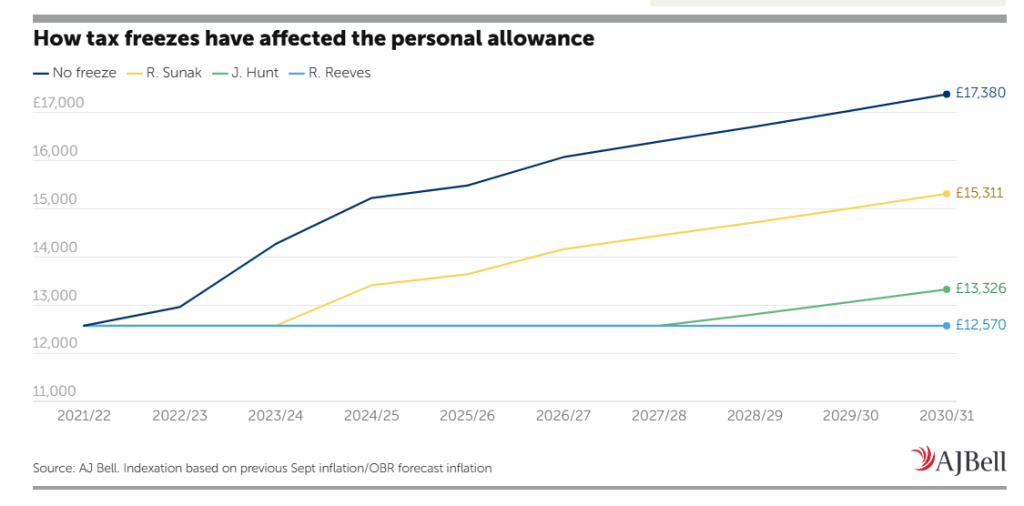
A new analysis from investment platform AJ Bell shows that the policy, which keeps the personal allowance stuck at £12,570 and the higher rate threshold at £50,270, is already costing basic-rate taxpayers hundreds of pounds extra each year, with the burden set to grow significantly by the time thresholds are finally due to rise in 2031.
Chancellor Rishi Sunak first announced the freeze in his March 2021 Budget, initially planning to hold it until 2026. Successive chancellors Jeremy Hunt and Rachel Reeves have since extended it, Hunt to 2028, and Reeves adding another three years at the 2025 Budget.
The result is that income tax bands will remain unchanged for a full 10 years from April 2021 to April 2031.
The cost of frozen thresholds
Because wages and prices have continued to rise while tax bands have not, millions of Britons are being pulled into paying tax on a larger portion of their income, or pushed into higher tax brackets altogether, without any change in the headline rates.
AJ Bell calculates that a basic-rate taxpayer could face up to £700.36 in extra income tax next year purely due to the erosion of the personal allowance since 2021.
By the end of the freeze in 2030/31, that annual hit is projected to rise to around £960, though the exact figure will depend on future wage growth and inflation.
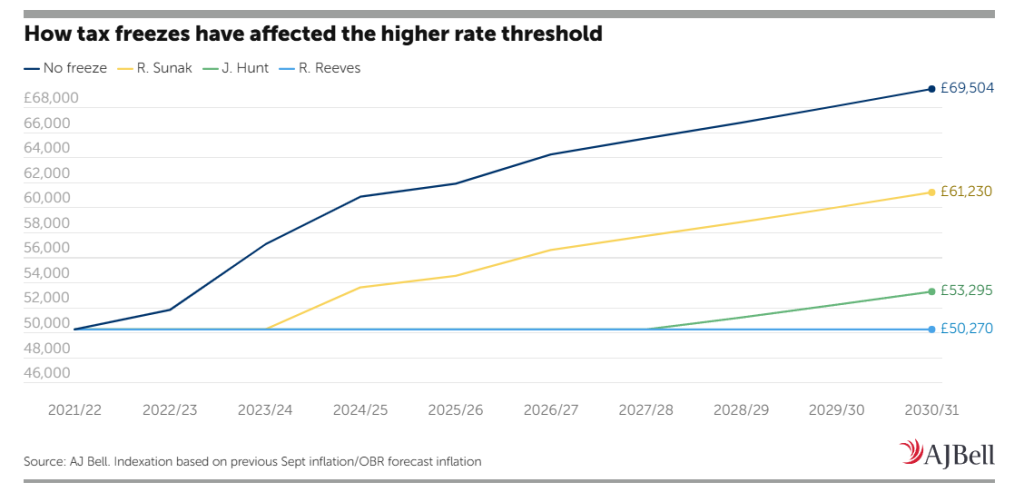
The impact is far more severe for higher-rate taxpayers, who could be paying as much as £3,500 extra next year. Had the higher-rate threshold kept pace with inflation, it would likely approach £70,000 by 2030/31, rather than remaining fixed at £50,270.
To illustrate the difference, AJ Bell compared tax bills on the same salaries under frozen versus inflation-linked allowances:
- Someone earning £35,000 today would pay nearly £4,500 in income tax in 2030/31 with frozen thresholds. With indexation, that bill would fall to around £3,500.
- A £75,000 earner would face £17,400 in tax under the freeze, compared to roughly £12,600 if thresholds had risen with inflation.
Fiscal drag
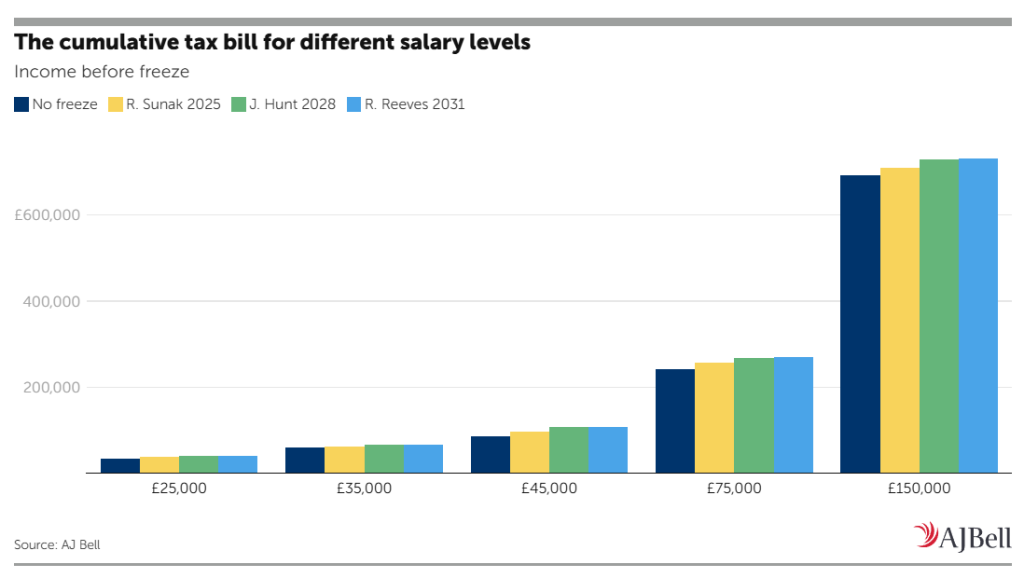
The true cost becomes even clearer when looking at cumulative effects over the decade, accounting for typical wage growth.
Take a worker starting on £35,000 in 2021/22. Assuming their pay rises in line with average earnings, they could be on around £53,000 by 2030/31.
Under inflation-linked thresholds, their total income tax over the period would be approximately £59,600. With the freeze in place, that cumulative bill jumps to more than £66,000, an extra £6,500 in tax over roughly nine years.
Earlier AJ Bell modelling for the original shorter freeze period showed similar patterns, with higher earners facing extra tax running into the thousands or even low teens of thousands over several years.
Millions dragged into the net
The Office for Budget Responsibility (OBR) has repeatedly revised its estimates upward as the freeze has been extended. Initially, it projected the policy would pull an extra 1.3 million people into paying income tax and push 1 million more into the 40% higher rate band.
Those figures have now ballooned. The OBR now expects the full 10-year freeze to force over 6 million additional people into the income tax system and create 4.8 million more higher-rate taxpayers by 2030/31.
The policy affects far more than just salaried employees, as it also hits:
- Pensioners with taxable retirement income;
- Savers whose cash interest exceeds their personal and savings allowances;
- Investors and company directors receiving dividends
Th stealth tax that keeps on giving
Critics argue the prolonged freeze represents one of the largest stealth tax rises in recent memory, raising tens of billions for the Treasury without the political pain of explicitly hiking rates.
The OBR has previously estimated that related income tax threshold changes could generate around £56 billion annually by 2030/31.
With the new tax year beginning and no relief in sight until 2031, the squeeze on household finances is set to continue, even as many Brits grapple with higher living costs.