Brits on weight loss drugs are spending £11 less a week on groceries – and cutting takeaways by nearly half as retailers scramble to catch up

The rise of GLP-1 receptor agonists, popularly known by brand names like Ozempic, Wegovy, and Mounjaro, has extended far beyond medical headlines.
In the UK, these appetite-suppressing medications are subtly but significantly altering everyday shopping habits, with knock-on effects rippling through the grocery sector.
According to new data from YouGov’s Health and Wellbeing Tracker (based on a nationally representative sample of over 2,000 GB adults, plus a boosted recontact survey of 303 current or former GLP-1 users conducted in February 2026), around 8% of Britons (4.3 million people) have already used these drugs, while 14% (7.6 million) would consider them in the future.
The changes in behavior are stark:
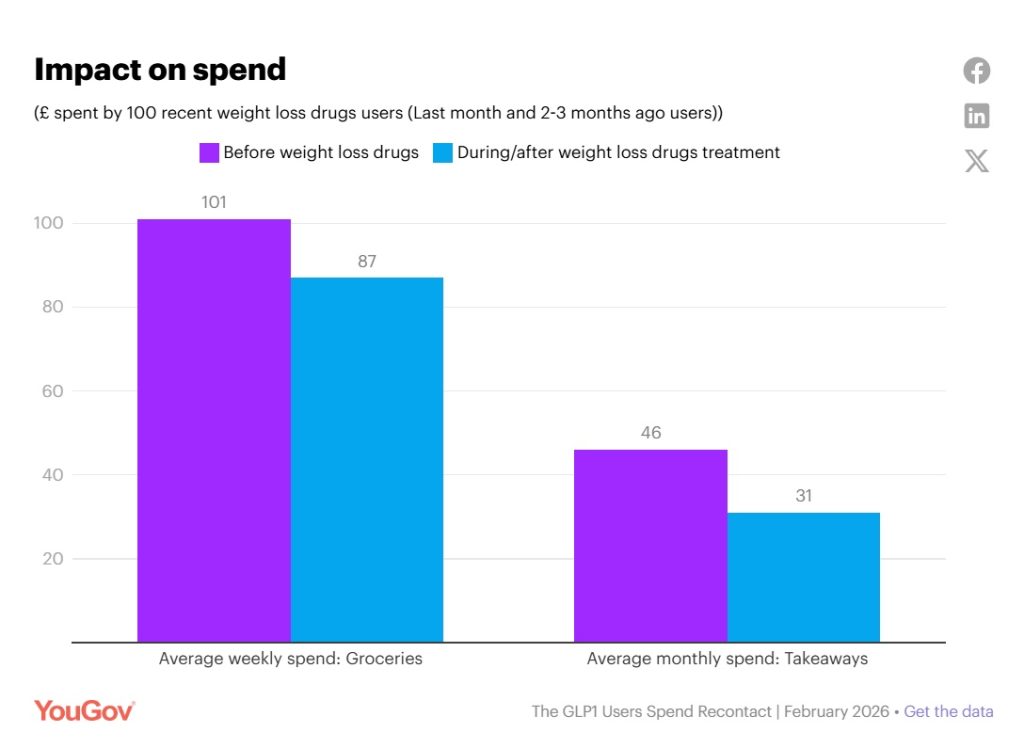
- Current users report spending £91 per week on household groceries – a drop of 11% from £102 before starting treatment;
- Takeaway spending has fallen even more sharply: from £49 to £30 per month for current users (a 19% decrease);
- Food choices shift toward nutrient density: 38% eat more vegetables, 23% more vitamins/supplements, and 21% more fish/seafood. Meanwhile, 64% snack less, 53% cut back on fast food, 39% drink less alcohol, and 67% lose interest in junk food overall.
“The rise of GLPs is having a huge impact on the grocery and takeaway market. Whilst the number of users is relatively low at the moment, this is only going to increase in the future, creating both opportunities and threats to the wider market from QSRs to grocers,” said Ag Hoffmann, YouGov’s Lead Healthcare Director.
How retailers are responding
Retailers are responding swiftly, with Marks & Spencer (M&S), Morrisons, and Ocado among the first to pivot toward this emerging cohort of ‘GLP-1 shoppers’ who demand smaller portions, higher protein, and foods that maximise nutrition per calorie.
M&S launched its ‘Nutrient Dense’ range late last year, featuring salads, snacks, meals, and drinks packed with fibre, vitamins, and minerals – explicitly positioned as suitable for those “reducing their food intake, such as people using the GLP-1 medications.” The line emphasises nutrient density over volume, helping users feel satisfied while eating less.
Morrisons went further by partnering with Applied Nutrition to introduce ‘Small & Balanced’, a seven-strong range of GLP-1-friendly ready meals explicitly labelled as such, the first UK supermarket to do so overtly. These portion-controlled options cater directly to reduced appetites while delivering balanced nutrition, often at a premium price per weight to reflect the value of controlled portions.
Ocado, the online grocer, has taken an innovative digital approach by creating a curated ‘Everything Weight Management’ virtual aisle launched in early 2026, featuring GLP-1-friendly products like a 100g extra-small steak, high-protein meals under 600 calories, and supplements.
The move followed Ocado’s own research highlighting a ‘nutrition gap’ among consumers and strong demand for lean proteins, cottage cheese, chicken, and health drinks. While the explicit ‘weight management’ branding was later adjusted amid regulatory considerations, the curated selection, including M&S Nutrient Dense items, remains prominent.
With projections of rising adoption, UK grocers are betting that early movers like M&S, Morrisons, and Ocado will capture loyalty from a health-conscious segment that values quality over quantity.