The UK’s new ‘mansion tax’ is already pushing down prices


The UK’s new ‘mansion tax’ is already pushing down prices in the high-end property market, according to a new analysis by estate agency Hamptons.
The policy, formally known as the High Value Council Tax Surcharge (HVCTS), was announced by Chancellor Rachel Reeves in the November 2025 Autumn Budget.
It imposes an annual levy on homes in England valued at £2 million or more (based on 2026 valuations), with charges starting at £2,500 for properties between £2 million and £2.5 million, and rising to £7,500 for those valued at £5 million and above.
The tax takes effect from April 2028, but the Valuation Office Agency (VOA) will begin assessing properties worth £1.5 million or more later this year to determine liability.
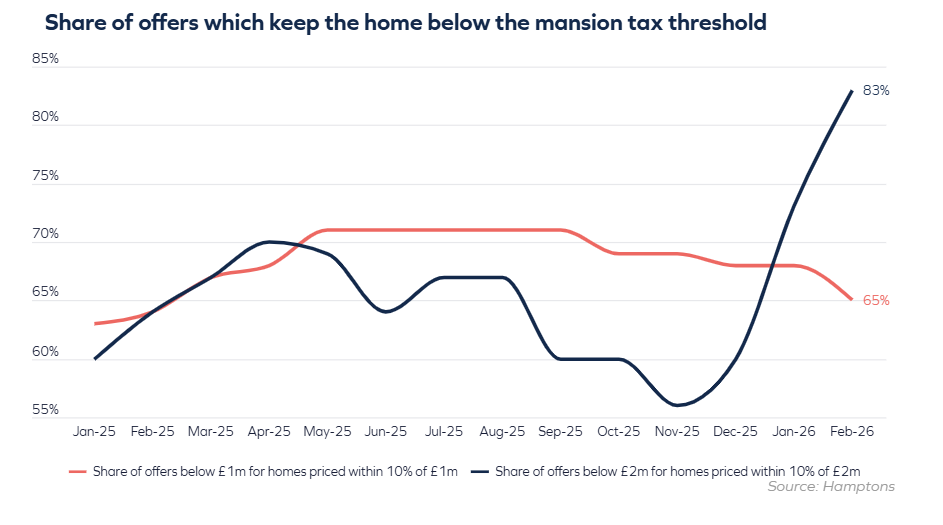
Although payments won’t begin for another two years, the announcement has already begun influencing buyer and seller behaviour, particularly around the key £2 million threshold, Hamptons’ latest research shows.
Buyers are increasingly submitting offers designed to keep the final purchase price below £2 million, avoiding the future surcharge altogether.
Hamptons found that 83% of offers on homes priced within 10% of the £2 million mark (between £1.8 million and £2.2 million) stayed under the threshold in the months following the Budget, up sharply from 64% a year earlier.
This buyer caution is feeding into achieved prices. Sellers, anticipating reduced demand above the line, are adjusting asking prices downward to attract interest. The result: noticeable “price bunching” just below taxable thresholds.
A shift in listings
In the two months after the Budget, the number of homes listed between £1.8 million and £2 million rose 5.6% year-over-year, while those between £2 million and £2.2 million fell 6.5%. A similar pattern emerged around the £5 million band, where listings above the threshold dropped 7% year-over-year, but those just below surged 35%.
“Our analysis suggests that buyers purchasing homes priced around the threshold are submitting offers that ensure the value sits below the entry level £2 million mark,” Hamptons said in its report. “We expect this to feed through into achieved prices, putting gentle downward pressure on values.”
“Together, these trends indicate that the Mansion Tax is already placing a gentle downward pressure on prices where homes are clustered close to taxable thresholds. Sellers are adjusting their prices based on buyer expectations.”
The tax is expected to affect a relatively small share of properties, fewer than 1% in England, with estimates ranging from around 100,000 to 200,000 homes ultimately in scope, the majority in London and the South East.
Hamptons estimates roughly 145,000 homes currently valued between £1.5 million and £2 million, and 130,000 above £2 million, though these figures could shift as the market adapts and prices adjust.
It noted that the policy creates a “cliff-edge” effect, incentivising owners to keep valuations below bands to minimise or eliminate the surcharge.
This could lead to broader distortions in the prime market, including delayed sales or strategic pricing to influence future VOA assessments.