Here’s how much money Brits spend on their weddings – and their second weddings

Weddings are often expensive affairs, but Brits are typically smarter and cheaper the second go around. The findings come from a survey of 2,001 UK adults who have been married more than once, carried out by Censuswide between January 2 and 12, 2026.
Banking group Monzo also analysed data from around 84,000 customer “Wedding” Savings Pots created between October 2022 and January 2025 to understand saving habits.
The data shows that the average first wedding in the UK now costs £10,546.65. By comparison, second weddings come in notably lower at £8,861.04, a savings of about 16%.
A cheaper second wedding
The data shows that many couples learn from their first big day: 60% reported financial regrets from their initial wedding, often citing unnecessary spending, inviting guests they’re no longer in touch with, or unclear budgets.
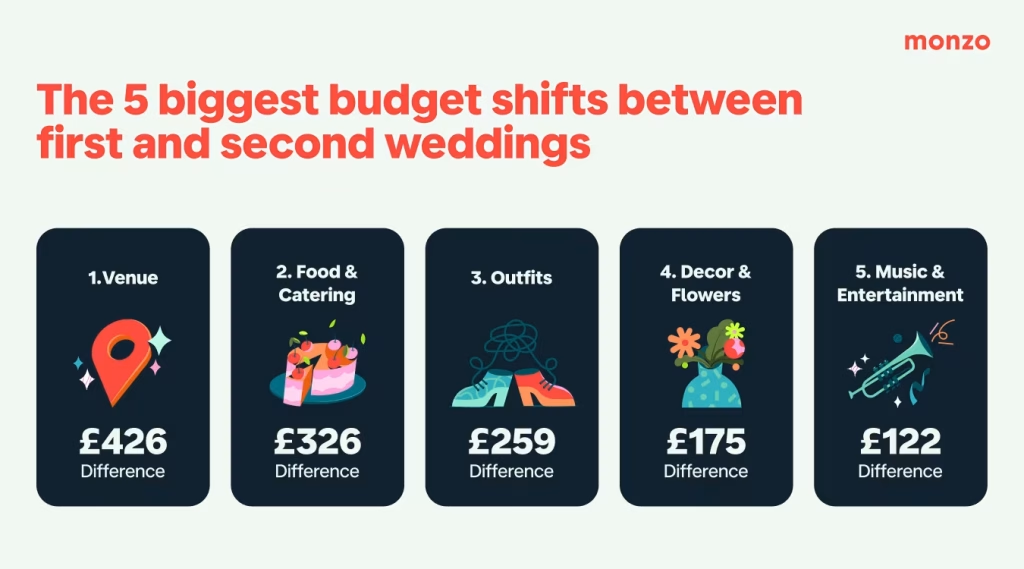
On the other side, 56% said they learned from those mistakes, leading to stricter planning and budgets the second time around. Over half (51%) opted for smaller second weddings, and 68% reported that going smaller actually made them happier.
A striking 83% prioritised financial security over extravagance for their encore nuptials, and 27% went over budget on their first wedding compared to just 11% on their second.
A change in funding
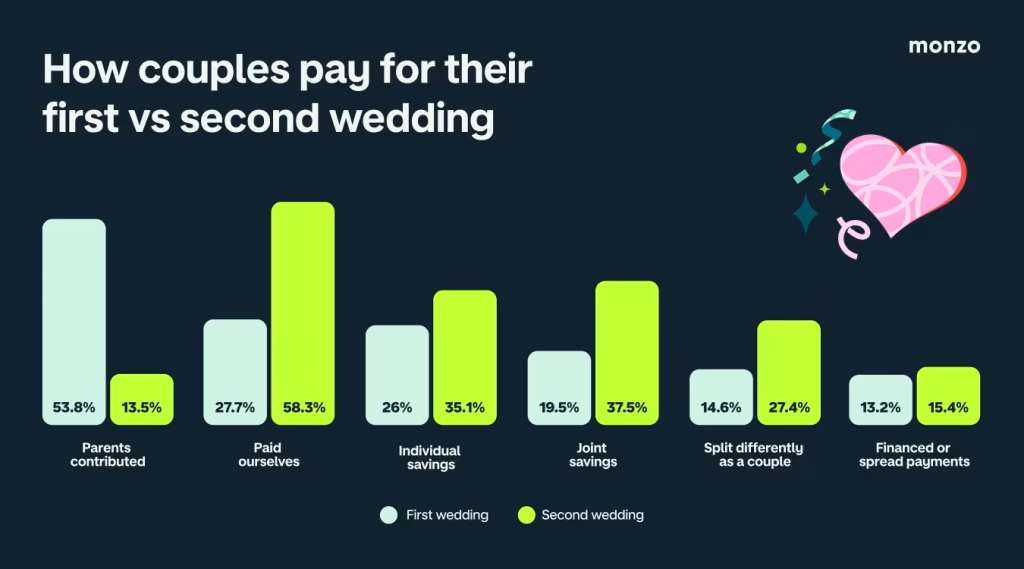
Funding has shifted too. While 54% got parental help for their first wedding, 58% paid for their second entirely themselves. Joint savings jumped from 19% on first weddings to 37% on second ones.
Monzo’s data shows joint “Wedding” Savings Pots are far more successful, averaging £6,000 saved compared to £2,900 in personal pots.
According to the wedding Pot data, there are 6 types of wedding saver personas:
- Disciplined Budgeters: who save monthly, every payday
- Major Wealth Fund: high earners with big budgets
- Roundup Heroes: they know that spare change adds up!
- Lump Sum Payers: likely to be moving money from other banks
- Steady Contributors: their saving is occasional but meaningful
- Pocket Change: they add smaller deposits here and there
Disciplined Budgeters are the most common type of wedding savers, and the group most likely to have a joint savings account with their partner.
So when it comes to wedding saving, it appears to work best when it’s automated, monthly and shared between two.