The UK just greenlit a technology that could finally kill mobile dead zones – and your phone doesn’t need an upgrade to use it


Telecoms regulator Ofcom has approved the country’s first licence variation allowing satellite connectivity straight to everyday smartphones.
Virgin Media O2 (VMO2) secured the green light to vary its existing spectrum licence, enabling it to roll out direct-to-device (D2D) services via its partnership with Elon Musk’s Starlink.
This marks a UK first and paves the way for ordinary phones to connect to satellites without any special hardware, apps, or upgrades required.
The breakthrough follows Ofcom’s finalisation of new regulations late last year, which opened the door for mobile operators to use their licensed spectrum for satellite links.
Those rules officially take effect on 25 February 2026, specifying the frequencies VMO2 can use and confirming compatibility with existing handsets.
Ofcom described the move as ‘a significant boost for UK mobile coverage’, aimed squarely at tackling “not spots” in hard-to-reach places like remote countryside, hills, and coastal regions.
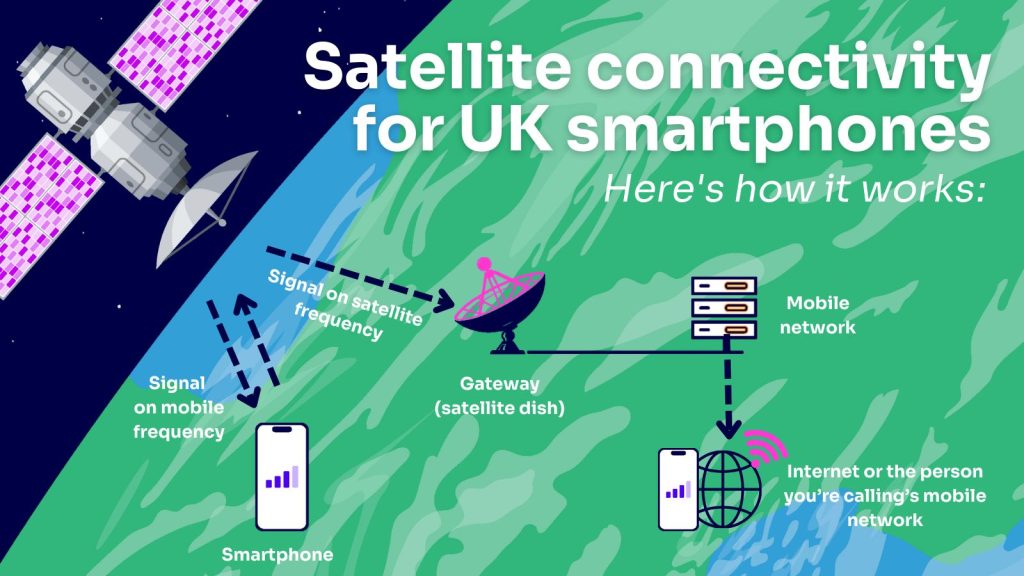
The service, branded O2 Satellite, is set to complement O2’s traditional mobile network rather than replace it. Phones will automatically switch to satellite mode in areas with no terrestrial signal, initially delivering essential messaging (texts, WhatsApp), data for maps, location sharing, weather apps, and other key functions.
Voice and video calls are expected to follow as Starlink’s constellation evolves, building on its more than 650 low-Earth-orbit satellites already supporting similar services in countries including the US, Canada, Australia, New Zealand, and Japan.
Virgin Media O2 first revealed the multi-year Starlink tie-up back in late 2025, with internal trials underway and customer rollout targeted for the first half of 2026.
The operator aims to push its overall landmass coverage beyond 95% within a year of launch, dramatically shrinking the gaps that have long plagued UK rural connectivity.
This regulatory milestone positions the UK as a leader in blending terrestrial and satellite networks, with other operators like Vodafone (partnered with AST SpaceMobile) also eyeing similar advancements.
For millions frustrated by dropped signals on hikes, drives through the countryside, or stays in isolated spots, the change could mean reliable connectivity without buying a new phone or carrying extra gear.