A massive pay slowdown has hit the UK – and just 18% of firms are now offering 5% raises


Pay rises are flattening out in the UK, with the median expected basic pay increase holding steady at a modest 3% for the seventh straight quarter.
This was a key finding from the Chartered Institute of Personnel and Development’s (CIPD) latest Labour Market Outlook for winter 2025/26, based on responses from more than 2,000 employers surveyed in late 2025 and early 2026.
The figure marks a significant cooling from the higher awards seen in previous years, when pay settlements often pushed into the 4-5% range or beyond amid post-pandemic recovery and inflation pressures.
Now, only a small slice of employers are planning to dish out 5% or more, as businesses grapple with squeezed margins and fresh cost headwinds.
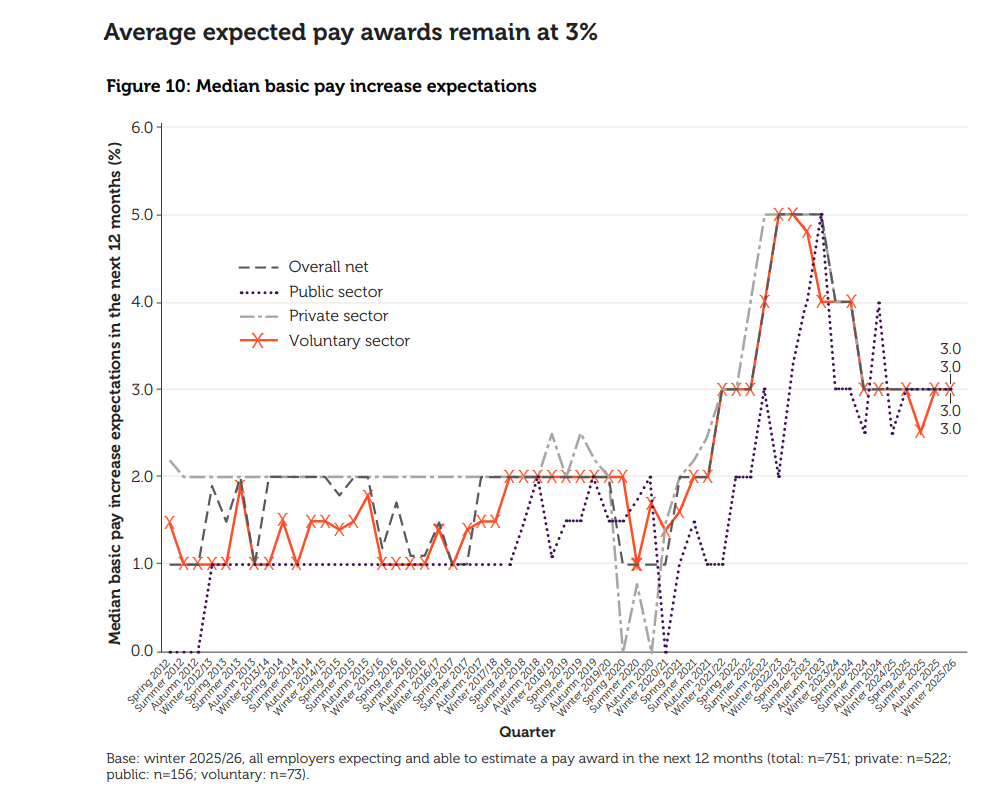
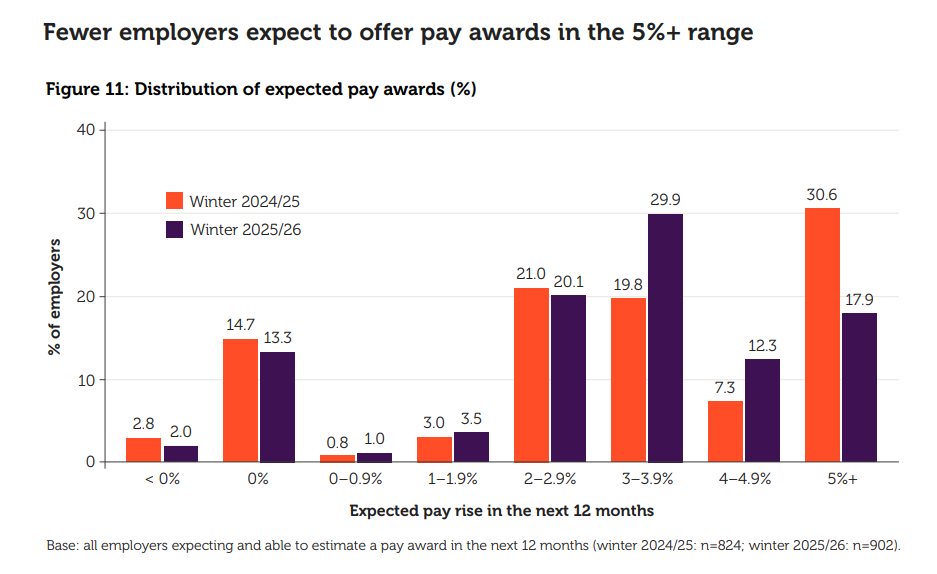
Even though the expected median pay award has not changed for some time, there have been downward shifts among many employers in the level of pay awards they plan to give.
Whereas 12 months ago 31% of employers planned to offer a pay rise of 5% or more, this has fallen to 18% of employers this quarter. Instead, more employers are within the 3–3.99% range, rising from 20% to 30% of employers.

Despite the current financial headwinds, few employers anticipate that they will have to cut pay or freeze it. In terms of the distribution, the lower quartile is estimated to be 2%, with the upper quartile at 4% – the same values as the last two quarters.
A worrying job market
The pay restraint comes against a backdrop of a stubbornly sluggish jobs market. The net employment balance, the share of employers expecting staff growth minus those anticipating cuts over the next three months, sits at a low +7, near historic lows outside the pandemic.
Public sector sentiment has worsened to -11, with ongoing recruitment freezes, voluntary exits, and redundancies in government departments contributing to a year of negative hiring plans.
Adding to the caution is the Employment Rights Act (ERA), now receiving Royal Assent and rolling out in stages through 2026. Three-quarters of employers expect the reforms, including day-one statutory sick pay and shifts to unfair dismissal rules, to push up their costs.
Around two in five say they’ll hire fewer permanent workers as a result, while over half foresee at least some increase in workplace conflict from the changes. Employers are particularly skeptical about trade union reforms, with nearly a third predicting more disputes rather than fewer.