Hope for UK job market as ‘zombie firms’ die out


The UK job market has reached an inflexion point as jobs continue to dry up and firms shutter. But this could also be a sign of a positive change, says the think tank Resolution Foundation.
Weak productivity growth is the main reason that incomes have risen so slowly since the financial crisis, the group said.
“A key driver of productivity growth is ‘creative destruction’, whereby newer and better firms, products or processes replace older, less-efficient, ones. One way to measure how much this is happening is by how many jobs are created by new, growing firms, and how many are destroyed by old, shrinking ones.
“In fact, this sort of reallocation of labour has been slowing for much of the 21st century, in the UK and elsewhere, for reasons that are not fully understood.”
But last year there were signs of a turnaround, the Foundation said. In particular, it pointed to the share of jobs destroyed by firms that are closing increased to the highest level since 2011, as did the number of firms becoming insolvent. The share of employment that moved between sectors has also started to increase.
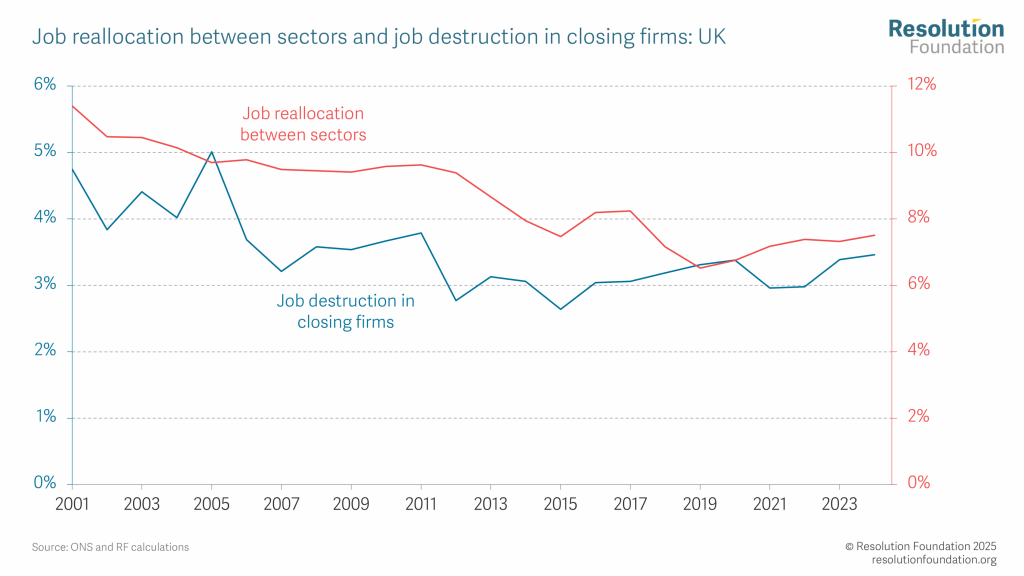
“Our hunch is that the triple whammy of multi-year increases in interest rates, energy prices and the minimum wage is finally beginning to finish off some of the low-productivity ‘zombie’ firms that managed to stay afloat in the 2010s, and this is forcing a reallocation of employment across firms and sectors. It’s also possible that we’re seeing the early effects of AI.
“Of course, these closures and job losses are hugely difficult for many of those directly affected. And it is hard to call this unambiguously good news. But if – and we haven’t seen it yet – they begin to make room for more and better jobs to be created in growing firms, then it bodes well for future productivity growth.”
The group’s own in-house estimates of productivity do suggest a turnaround in growth over the past year or so. Not because output has been growing especially quickly, but because the number of people working to produce that output has been falling.