International landlords are driving the UK’s buy-to-let market


So far in 2025, one in five newly incorporated buy-to-let companies in the UK is owned by non-UK nationals, up from 13% in 2016, marking the ninth increase in the past decade.
This is according to new data by property group Hamptons, which found that the number of buy-to-let companies set up across the UK in 2025 is running 8% ahead of last year’s record levels.
At current rates, around 67,000 new companies will be set up by the end of 2025, with around 13,500 owned, at least in part, by non-UK nationals.
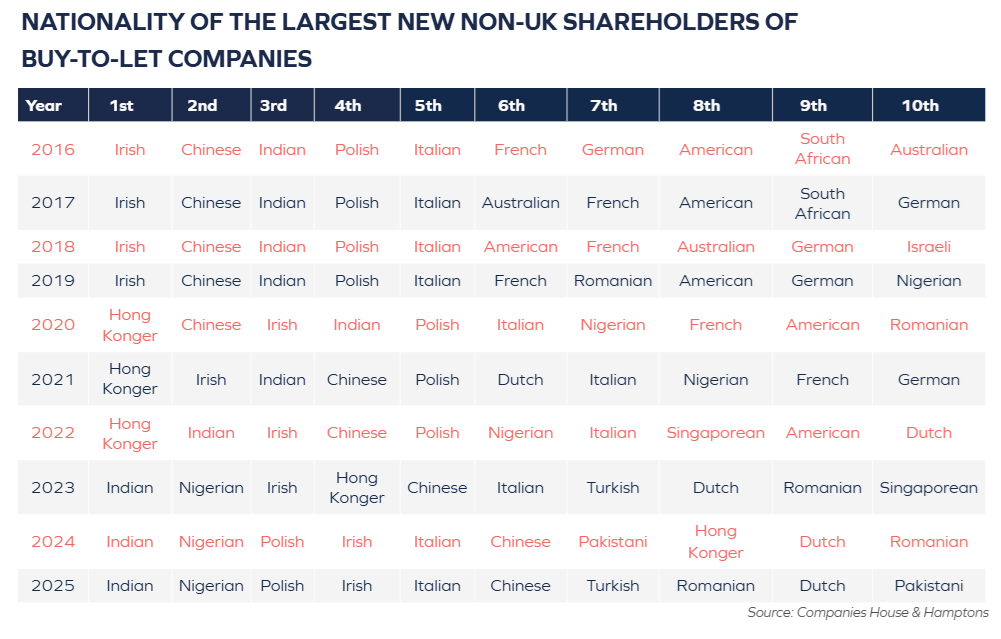
Indian nationals are leading the charge internationally, founding 684 new companies in the first half of the year, with more registered in Hillingdon than in any other Local Authority. Nigerian investors follow closely with 647 new incorporations, while Polish and Irish nationals also feature highly,” Hamptons said.
This shift reflects wider post-Brexit migration patterns. EU nationals now account for 49% of non-UK shareholders, down from 65% in 2016, the group said.
2Meanwhile, South Asian and African investors are stepping into the spotlight. The London market has long been an international one, but demand is steadily shifting into lower-value markets outside the capital, where growth in both house prices and rents has typically been strongest.”
London remains the hub for international buy-to-let ownership, with 27% of new companies registered in the capital owned by non-UK nationals. In boroughs like Kensington & Chelsea and Hammersmith & Fulham, that figure exceeds 50%.
“However, the most dramatic growth is happening outside London. Between 2016 and 2025, foreign ownership more than doubled in the East Midlands, West Midlands, and Scotland. Runnymede now boasts the highest share of new companies owned by non-UK nationals at 59%.
“While overseas-based investors are part of the picture, the majority of purchases by non-UK nationals reflect domestic demand. Up until 2021, this demand was most likely to come from EU nationals based in the UK,” Hamptons said.
Since then, it has shifted to reflect changes in broader migration patterns, with Indian and Nigerian nationals increasingly likely to buy UK buy-to-let property through a limited company structure.