UK could be forced to skip rate cut this year if Middle East issues continue: economists


There was always very little chance that the Bank of England (BoE) was going to cut interest rates last week, despite a slight shift in mood as three members, rather than the expected two, voted for a 25 base point (bp) reduction.
The Monetary Policy Committee (MPC) has been happy to go with one cut a quarter for the last year, and we see this continuing over the rest of 2025, says Tom Pugh (Partner at consulting firm RSM UK).
The big, obvious risk, though, is if events in the Middle East cause a surge in energy prices that forces the MPC to skip a rate cut, he said.
Birdwatching
Hawks will highlight that at 3.4%, inflation is way above the 2% target and set to head higher over the summer, Pugh said.
“The BoE’s own forecasts also don’t have inflation coming back down to 2% until 2027, by which point it will have been above target for most of the last five years. What’s more, regular pay growth is at 5%, which is almost double the 3% consistent with 2% inflation. That’s important because strong wage growth will encourage firms to raise prices to try to recoup their additional costs.
“Inflation expectations have been rising steadily recently. That’s concerning because if households expect higher inflation, then they will bargain for bigger wage increases and firms are more likely to grant them, believing they will be able to pass on the increase in costs.”
At the same time, doves will point to the sharp loosening in the labour market since the Autumn Budget in October and that wage growth has already come down from its recent peak of 6.2% and should continue to slow, Pugh noted.
“The resilience of the economy in the first quarter also looks to be fading. Growth turned negative in April, and retail sales in May fell sharply. A slower-growing economy will generate less inflation and need lower interest rates.”
UK inflation still a problem
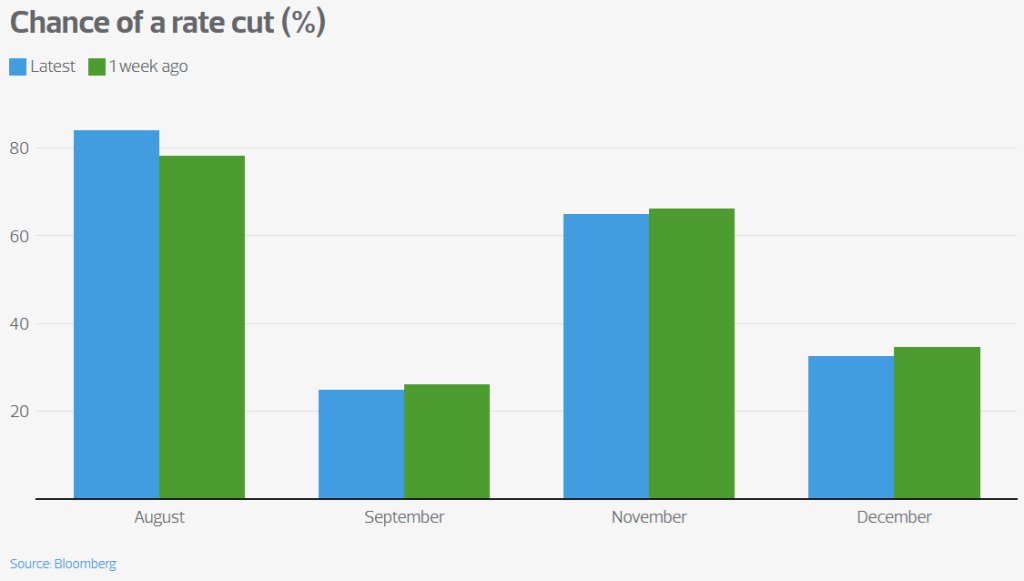
The MPC as a whole has to balance these two competing narratives by taking a “cautious and gradual” approach. Translating from BoE speak, that means the base case is one 25bp cut a quarter and would take interest rates to 3.75% by the end of the year, Pugh said.

He added that he and his team have pencilled in one more rate cut in 2026 on this basis.
However, a couple of risk factors could force the MPC off that path. The most obvious and urgent are events in the Middle East, causing energy prices to rise again.
“We don’t think the recent increase in oil prices will change the MPC’s thinking. However, a shift towards $85 per barrel or higher would probably push inflation over 4%. That’s important for the MPC because the academic literature suggests that’s when households start bargaining for bigger pay rises to protect their real incomes,” he said.
“Normally, we’d expect the MPC to look through energy-driven inflation movements. This is because prices can be volatile and monetary policy can’t feed through into the economy quickly enough to have a material effect. However, inflation expectations are currently far too high. A big rise in prices at the pump would push them higher and could prompt the MPC to slow the pace of easing.”
On the other side of the ledger, the MPC has become much more worried about the labour market after the recent run of poor data, Pugh said.
“We expect employment to stabilise from here, but if it doesn’t, then we could see additional rate cuts to support the economy.
“If we’re wrong about two more rate cuts this year, then we feel it’s more likely there will be fewer, rather than more, cuts. But much depends on how events in the Middle East unfold.”