1 in 10 UK pubs on verge of closure


Research of credit risk scores and balance sheet information shows that more than one in 10 (11%) of British pubs are facing imminent closure due to their worsening financial position over the past year.
An analysis by accounting firm Price Bailey looked at the credit risk scores and balance sheet information of all 37,961 pubs and bars in the UK. It found that 7,445 (20% of the total population) have negative net assets on their balance sheets.
A business with negative net balance sheet assets is deemed to be technically insolvent, indicating that these businesses are vulnerable to going bust.
Of the 7,445 pubs which are technically insolvent, 4,310 have a Delphi Risk score in the Maximum Risk category (11% of the total population of 37,961 pubs). That is an increase of 930 from 12 months ago, when 3,380 pubs were classed as both technically insolvent and in the Maximum credit risk category, representing 9% of the total number of pubs.
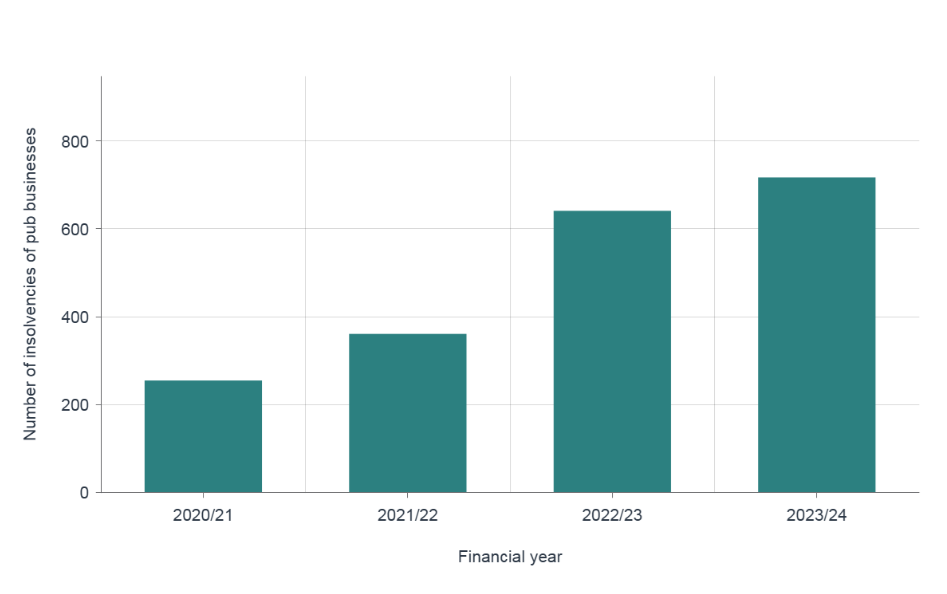
“The number of pub closures in the first six months of 2024 matched last year’s record, and there are few signs of improvement,” said Matt Howard (Head of the Insolvency and Recovery Team at Price Bailey).
“More than one in 10 British pubs are technically insolvent and at imminent risk of collapse. These businesses will find it almost impossible to access extra funding unless the owners provide personal guarantees, which few are likely to do in the current climate,” he said.
Increased costs are eating into pubs
The British Beer and Pub Association has previously warned that the sector is wrestling with a barrage of extra tax and fees following the April cliff-edge, which is costing the industry an extra £853 million.
“Following the avalanche of new fees in April which saw new costs hit the industry, the BBPA is calling on the Government to ease the burdens placed upon the sector,” said Emma McClarkin (Chief Executive of the British Beer and Pub Association).
“We urge the Government to support our sector by reforming business rates, reviewing punishing EPR costs, and mitigating new employment fees so that it can continue to drive the UK economy’s growth and supporting local jobs,” she said.
The BBPA said the government can relieve this pressure by permanently rebalancing the business rate system, reviewing chaotic EPR costs, mitigating new employment fees, and ensuring the Employment Rights Bill doesn’t remove flexibility for the sector.