More than a third of UK businesses plan to cut staff due to tax hikes


More than a third of business owners are planning to make further cuts to staff numbers in response to increased employer National Insurance Contributions (NIC), according to new research by professional services firm S&W.
The research, which polled 500 UK business owners with turnovers of £5 million and upwards, was published as part of S&W’s Business Owners Sentiment Survey (BOSS) report.
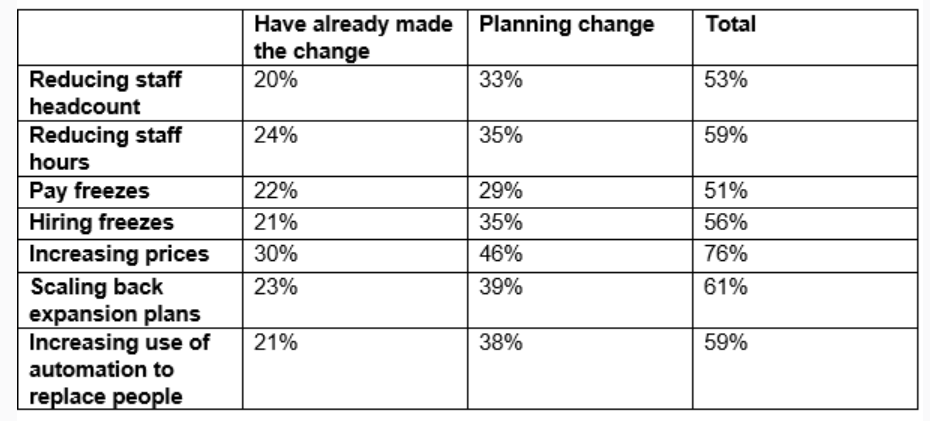
The data shows that 20% of companies had already reduced their staff headcount as a direct result of NIC changes announced in the October 2024 Budget, and that an additional 33% are planning to make further cuts.
Combined, it means more than half (53%) of business owners surveyed have or are planning to reduce staff numbers in response to the NIC changes announced by the Chancellor. NIC contributions officially increased from 13.5% to 15% in April 2025.
Other challenges facing businesses
Aside from NIC changes, the data shows that a range of other factors have hit UK businesses in recent months.
Rising costs were among the most likely to have hit businesses, whether increased energy and fuel prices (33%) or increases in raw materials and goods prices (31% for both). Among owners with more than 500 employees, 41% said rising staff costs had impacted them.
The other major issue which UK businesses have had to contend with is US President Donald Trump’s tariff regime, as well as ongoing international conflicts in Ukraine and the Middle East. As a result, 31% of businesses said they had been impacted by global uncertainty.
Over one in five, meanwhile, said that their business had been affected by reduced customer demand (22%), labour shortages (21%), and cyber attacks or data breaches (21%).
Businesses see an equally wide array of potential challenges ahead. Similar concerns were raised by owners when asked what three factors had the potential to most negatively impact their business. Over a fifth chose the increased costs of raw materials and goods (24%), labour shortages or skills gaps (24%), increased labour costs (23%) and reduced customer demand (22%).
Notably, it was increased taxation again that was most likely to worry business owners. A quarter (25%) said this had the potential to impact their business most negatively.
“Businesses face considerable challenges in the current economic climate, and many owners are having to make difficult decisions to stay afloat,” said Claire Burden (Partner in the Consulting team at S&W).
“Given that salaries represent a considerable proportion of the overall cost base for most businesses, it is to be expected that many are looking closely at headcounts in response to the increased National Insurance costs,” she said.