Surprise increase for property prices in the UK


The annual rate of house price growth increased marginally in May to 3.5% – a surprise jump and a sign that demand for housing remains resilient following the expiry of a tax break for buyers, new data from Nationwide shows.
House prices were up 0.5% month on month, while house prices in predominantly rural areas have risen by 23% over the last five years, compared to 18% in more urban areas, the data shows.
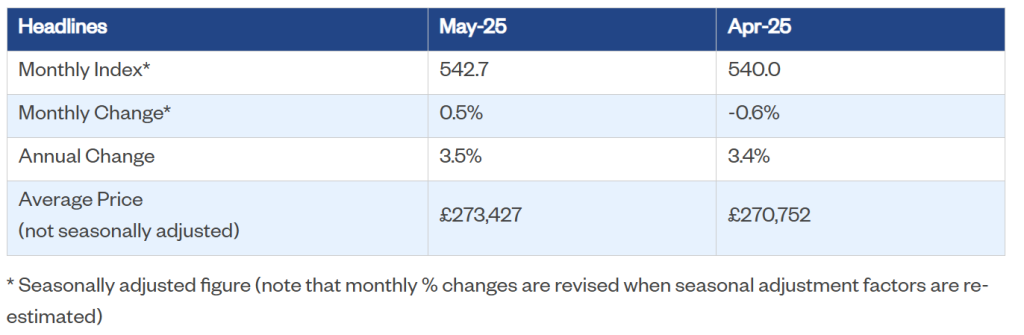
“Annual UK house price growth was marginally stronger in May at 3.5%, compared with 3.4% in April. House prices rose by 0.5% month on month, after taking account of seasonal effects,” said Robert Gardner, Nationwide’s Chief Economist
“Official data confirmed that there was a significant jump in residential property transactions in March, with buyers bringing forward their purchases to avoid additional stamp duty costs. Owner occupier house purchase completions were around twice as high as usual and the highest since June 2021 (which was also impacted by stamp duty changes).”
Nevertheless, mortgage approvals data suggest that market activity appears to be holding up well following the end of the stamp duty holiday, said Gardner.
“Despite wider economic uncertainties in the global economy, underlying conditions for potential home buyers in the UK remain supportive,” he said.
“Unemployment remains low, earnings are rising at a healthy pace (even after accounting for inflation), household balance sheets are strong, and borrowing costs are likely to moderate a little if Bank Rate is lowered further in the coming quarter,s as we, and most other analysts, expect.”
Countryside homes outstripping urban homes
Nationwide’s data shows that the average house price growth in predominantly rural locations has continued to outpace more urban areas. Between December 2019 and December 2024, house prices in predominantly rural areas increased by 23%, compared with 18% in areas that are largely urban.
“The pandemic had a significant impact on housing demand during 2021 and 2022, with a shift in preferences towards more rural areas, particularly amongst older age groups. Whilst these effects have now faded, less urban areas have continued to hold the edge in terms of house price growth,” said Gardner.
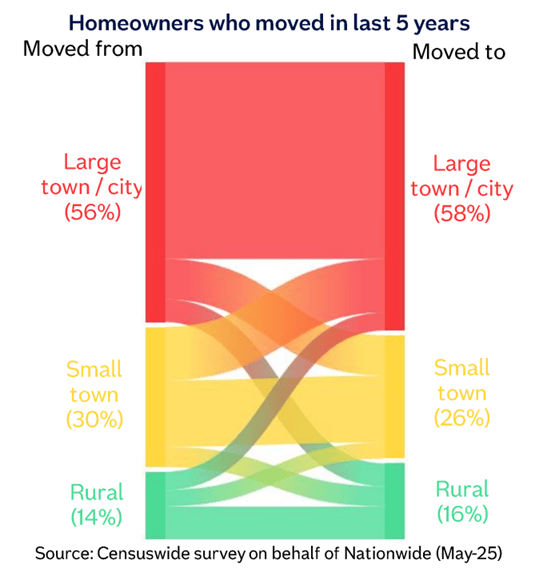
The findings indicate that the majority (63%) of house moves were within the same type of area, with the biggest flow being within large towns or cities. Around 9% of moves were from towns/cities to rural areas (villages or hamlets), although this was partially offset by 7% who moved from rural to more urban areas.
“However, amongst those who moved to a different type of area, there was a significant difference by age group, with younger people (those aged 25-34) tending to move to more urban areas, and older age groups, particularly 55+, favouring more rural areas,” said Gardner.