UK car-making falls to lowest level since 1952


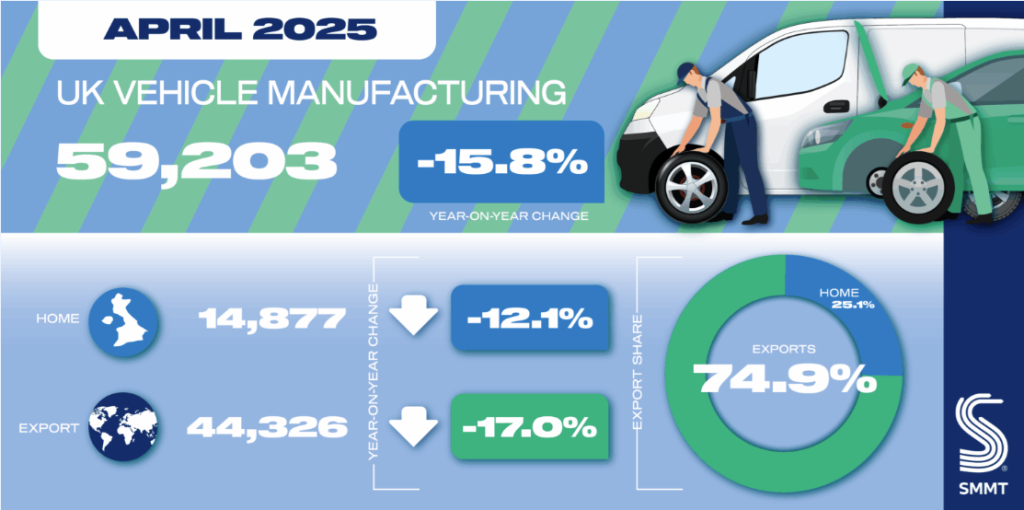
UK car and commercial vehicle production fell by -15.8% to 59,203 units in April, according to the latest figures published on Thursday (29 May) by the Society of Motor Manufacturers and Traders (SMMT).
The decline means that vehicle output fell to the lowest level for the month since 1952, excluding 2020 when the first Covid lockdown effectively saw manufacturing cease. The result caps off the sector’s lowest start to the year since 2009, the group said.
SMMT noted that April’s decline in car output was driven by a combination of factors, notably the later timing of Easter – which saw fewer production days in the month (and hence a factor behind the comparative rise in output in March) – as well as model changeovers and lower demand in key export markets.
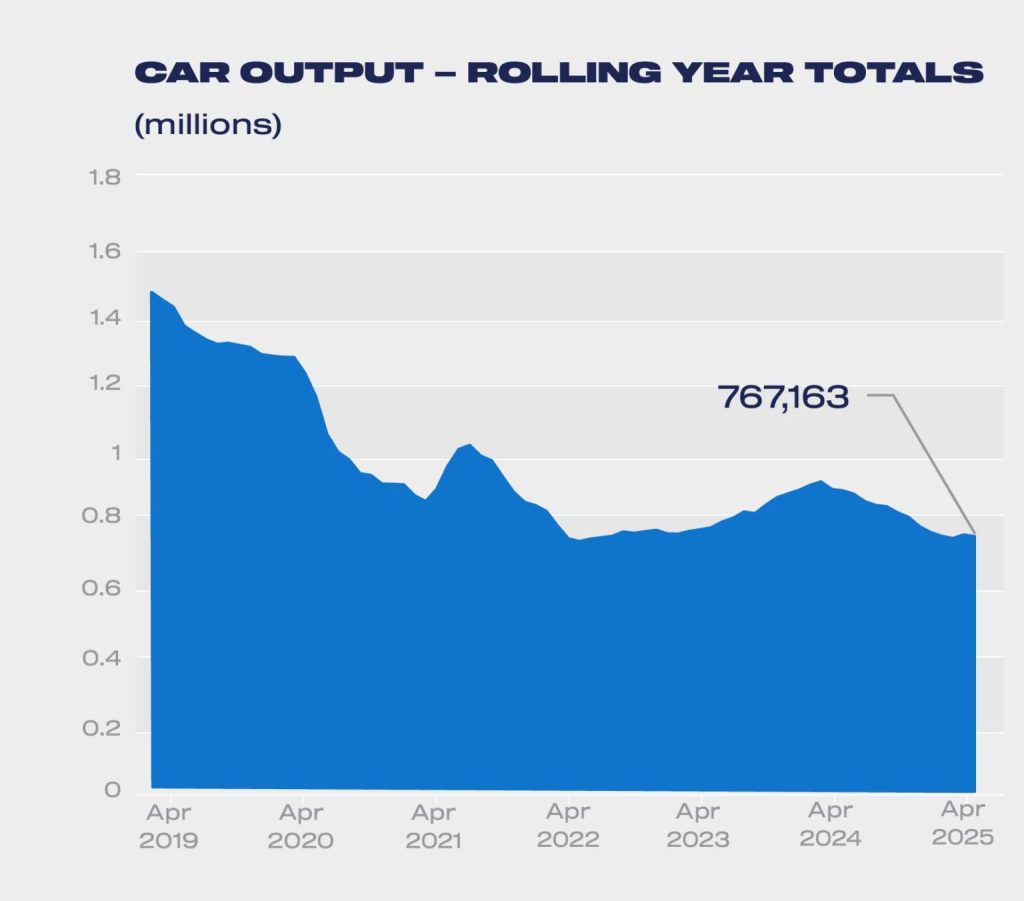
As a result, car production fell -8.6% to 56,534 units. Commercial vehicle output also declined, by -68.6% to 2,669 units, driven primarily by a plant closure and normalising demand for new heavy goods vehicles (HGVs) following robust post-pandemic growth.
Car production for export fell -10.1%, while production for the domestic market, always a smaller proportion of volumes, also decreased by -3.3%.

Shipments to the UK’s two largest global markets, the EU and US, fell by -19.1% and -2.7% respectively, although the EU still took more than half of all exports while the US received 16.5%. By comparison, exports to China and Turkey rose by 44% and 31.2% respectively.
“With automotive manufacturing experiencing its toughest start to the year since 2009, urgent action is needed to boost domestic demand and our international competitiveness,” said Mike Hawes (SMMT Chief Executive)
“Government has recognised automotive manufacturing’s critical role in driving the UK economy, having successfully negotiated improved trading conditions for the sector with the US, EU and India in the space of a month.
“To take advantage of these trading opportunities we must secure additional investment which will depend on the competitiveness and confidence that can be provided by a comprehensive and innovative long-term industrial strategy. Get this right and the jobs, economic growth and decarbonisation will flow across the UK,” he said.