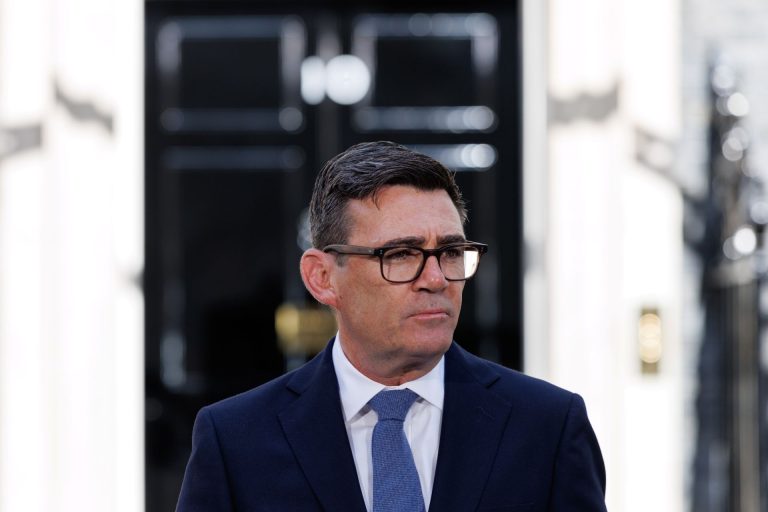
Andy Burnham’s £70-billion problem


Key Points
- Resolution Foundation analysis found Britain's regional income gaps have barely moved between 1997 and 2023
- Kensington and Chelsea had the highest disposable income per person at £60,584; Leicester the lowest at £13,398
- The 4.5x gap between the richest and poorest local areas has held for nearly three decades
- 82% of the richest fifth of local authorities in 1997 were still in the top fifth in 2023
- 54% of the poorest fifth in 1997 remained in the bottom fifth in 2023
Andy Burnham has spent nearly a decade building a political identity on the idea that Britain’s economy is rigged against the places outside London. It made him “King of the North”, carried him back into Parliament, and now he faces a clear route to become the country’s next Prime Minister.
New analysis from the Resolution Foundation, launched at an event hosted by Atom Bank at its Newcastle headquarters, suggests just how heavy that inheritance is.
The data shows that income gaps between Britain’s regions and nations have remained stubbornly wide between 1997 and 2023 – through periods of New Labour, austerity, Brexit, a pandemic, and an entire political programme explicitly designed to close them.
The data shows that gross household disposable income per person in London stands at £27,900, nearly 60% higher than Northern Ireland’s £17,300.
At the local level, the divide is wider still, as disposable incomes in Kensington and Chelsea, the highest-income local area at £60,584, were four and a half times those in Leicester, the lowest at £13,398.
The data shows that the ratio has held broadly constant for nearly three decades, despite increases in pay. More than half of the local authorities in the poorest fifth for income per person in 1997 were still there in 2023.
Among the richest fifth, 82% never left the top. Even the Covid-19 pandemic, which was widely predicted to redraw Britain’s economic geography as remote work loosened London’s gravitational pull, changed nothing.
Between 2019 and 2023, the income gap between residents of the richest and poorest tenth of local authorities stayed exactly where it was.
“Britain has among the highest regional inequality of any advanced economy, and successive governments have tried and failed to reduce these income divides,” said Ruth Curtice, the Foundation’s Chief Executive, who presented the analysis. “The gap between rich places like Kensington and Chelsea and poor places like Leicester is just as high today as they were 30 years ago.”
The maths of levelling up
The Foundation’s diagnosis is that Britain’s income divides are ultimately a productivity story. Output per job in London, at £90,000, was double that of Conwy and Denbighshire, 1.6 times Newcastle’s, and 1.3 times that of the Manchester metropolitan area.
Manchester is, in fact, the analysis’s most instructive case. Its income per person grew 40% in real terms between 1997 and 2023, the clearest example of a British city bucking the national pattern of decline.
Yet even after that remarkable run, its disposable income per person of £16,500 sat two-fifths below London’s, and still sits below Sheffield, Newcastle and Liverpool. Britain’s best urban turnaround story, in other words, has not yet lifted its residents past cities nobody describes as booming.
The Foundation pointed to Germany as the one advanced economy that has meaningfully compressed its regional divides. Post-reunification convergence spending amounted to roughly £70 billion a year, sustained for 25 years.
That is the equivalent of running the Covid furlough scheme annually for a generation. Levelling-up-related expenditure in Britain in 2022, by comparison, came to around £4 billion.
“PM-in-waiting Andy Burnham has rightly put regional inequality at the top of his agenda,” Curtice said.
“But turning ambition into reality will require investment in transport, housing and wider economic development on a scale that no recent political leader has come close to meeting. Unless that investment is taken seriously, the economic and political cost of Britain’s geographic divides will continue.”