Britain’s busiest railway will hit capacity a decade before its replacement opens
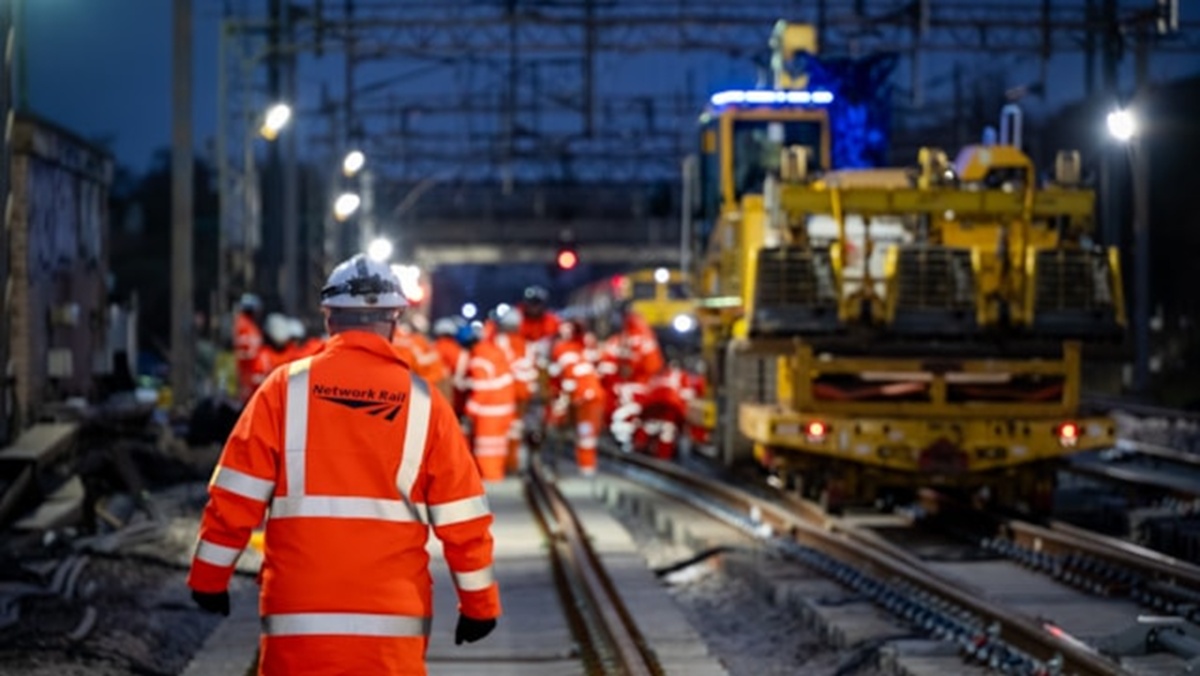

The West Coast Main Line is full. The regulator says so, the Department for Transport says so, and no more train paths can be squeezed onto it. The infrastructure meant to relieve it will not be finished until the mid-2040s – roughly a decade after capacity has been hit.
This was confirmed in a new report published on 1 July 2026 by the House of Commons Committee of Public Accounts, which examined the government’s revived Northern Powerhouse Rail programme and found a timeline that does not match the problem it is supposed to solve.
Mind the gap
In February 2025, the Department told MPs it expected the West Coast Main Line – the line connecting London, Birmingham, Manchester and Glasgow – to reach capacity by the late 2030s.
In evidence to the committee this year, officials went further, saying the Office of Rail and Road already regarded the line as full and unable to accommodate additional services.
The government’s answer is the second phase of Northern Powerhouse Rail.
As part of its January 2026 Northern Growth Strategy, it committed to a new line between Birmingham and Manchester and confirmed the programme would proceed along the former HS2 alignment into Manchester, effectively resurrecting the corridor abandoned when HS2’s northern leg was cancelled.
But the Department does not expect phase 2 to be complete until the mid-2040s.
MPs pressed officials on how they intended to bridge the intervening decade. The answer amounted to: watch this space. The Department said it was examining a range of measures to boost capacity without new infrastructure, but offered no details on what those measures were.
Why the railway can’t come sooner
The Department’s defence of the timeline rested on three arguments.
First, that projecting rail demand 15 to 20 years out involves significant uncertainty – the crunch may not land exactly when forecast.
Second, that the design and consenting process, including the passage of a hybrid Bill through Parliament, simply takes years.
Third, that a phased construction programme gives the supply chain a steady, even profile of work, which keeps costs down.
This is arguably a legacy of the HS2 project, where rushed scoping and premature cost estimates proved ruinous. As a result, the Department has moved towards more deliberate and sequenced planning. While this shift is arguably necessary given that the costs of HS2 have ballooned, it means that things are being down slowly.
The Committee is now pushing the Department to clarify how Northern Powerhouse Rail will actually meet the West Coast Main Line’s capacity requirements, and how it will integrate with local transport plans along the route.
What does a full railway mean in practice?
A line at capacity is not necessarily a line that stops working, but rather a line that stops improving. Operators cannot add services to meet growing demand, freight competes with passengers for scarce paths, and any disruption cascades with nowhere to reroute.
This will be particularly damaging to PM-to-be Andy Burnham, who is looking to unlock growth in the northern cities.
The delay is especially egregious as Northern Powerhouse Rail has been promised since 2014, has been rescoped repeatedly by successive governments, and remains – 12 years on – a programme without a confirmed route, a chosen builder, or an answer to the most immediate question on the network it joins.