‘Westminster is broken’: Burnham

Key Points
- Burnham used his first leadership speech to call Westminster "broken" and pledge a "circuit-breaker" for Britain.
- Flagship policy is "No 10 North", a prime ministerial operation based in Manchester to drive devolution UK-wide.
- He set out a 10-year economic mission for "good growth in every postcode".
- Commitments include the biggest post-war council housebuilding drive and business rates reform.
- He could enter Downing Street within three weeks if unopposed.
Andy Burnham used his first major speech as Labour leadership frontrunner to declare the political system broken and pledge the biggest transfer of power out of Whitehall in modern times, headlined by a “No 10 North” run from Manchester.
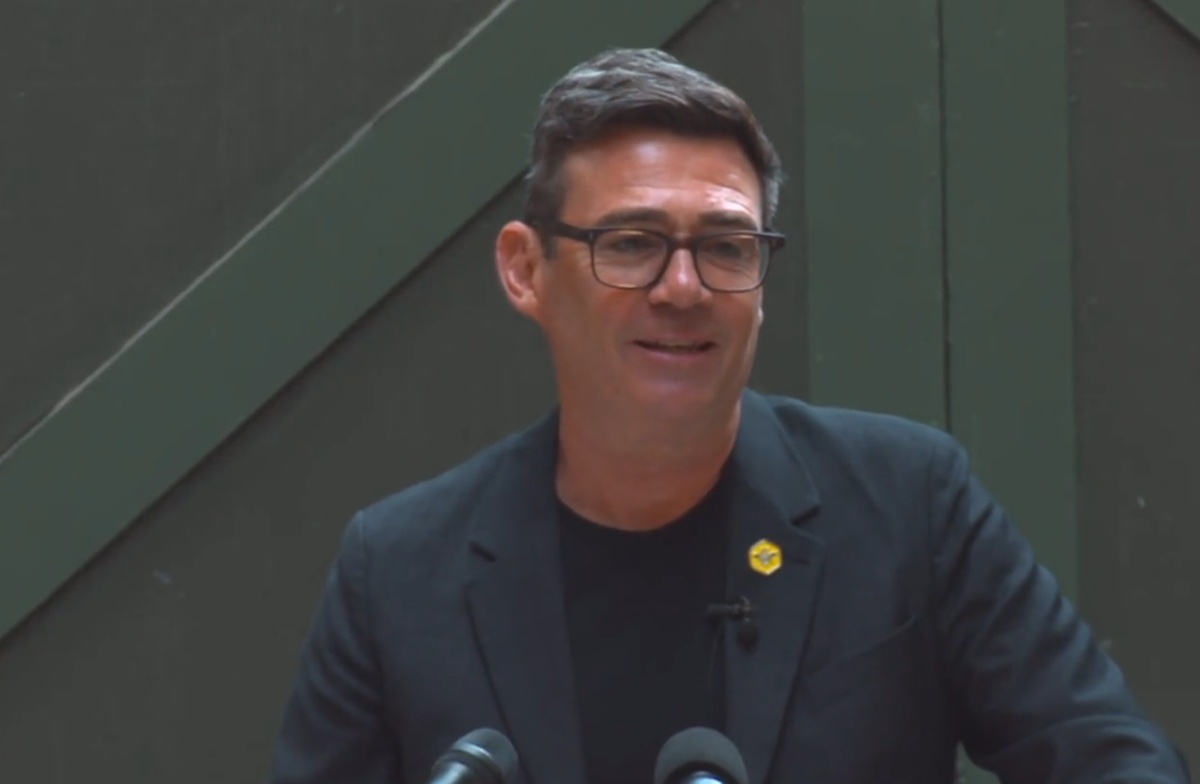
Speaking at the People’s History Museum in Manchester on Monday (29 June), Burnham said he would give Britain the “circuit-breaker” it needs by building a more collaborative politics and devolving power out of Westminster.
“Westminster hasn’t been working for people. It’s broken,” he told a room of northern Labour MPs, mayors and a handful of ministers. “My generation of politicians must take responsibility, we haven’t been good enough.”
The hour-long address, delivered without questions, doubled as a soft launch for a premiership that may arrive within weeks. If Burnham remains the only candidate for the Labour leadership, the speech came exactly three weeks before he could enter Downing Street.
The king in the north
The centrepiece of Burnham’s plan is a structural one. He launched the idea of a Number 10 in the north, an extended operation based in Manchester, which he called “the nerve centre of a rewired Britain” and promised that “the days of Whitehall fighting the devolution power into the regions and nations are over for good”.
Crucially, he framed it as a national redistribution rather than a northern land-grab. “It will only be based here,” he said. “The job of No 10 North will be to make power flow into the Midlands, into the South West, into the East of England, and yes, into London.”
Attached to it is a 10-year economic mission, which tells you Burnham is planning for two terms, not one. He set out a decade-long plan to raise living standards through reindustrialisation, housing, infrastructure and reform of essential utilities, with the ambition of “good growth in every postcode”.
Notably for the markets, this is not a borrowing spree dressed up as devolution: Housing Secretary Steve Reed has signalled Starmer’s likely successor will introduce “changes in emphasis” but stick to the fundamentals, including the government’s borrowing rules.
The headline commitments
- High streets: Business rates reform aimed at reviving town centres and local trade.
- Housing: No 10 North would oversee the biggest council house building programme since the post-war period.
- Reindustrialisation: A rebuilt industrial base with education paths that don’t funnel every young person toward university.
- Utilities and regeneration: Greater regional control over water, energy, housing and transport.
Mirte Boot, Interim Head of IPPR North, said Burnham was right to call for bold, transformative change, arguing the status quo “isn’t working” and political trust sits “at rock bottom”.
The opposition was less impressed. Liberal Democrat leader Ed Davey said the country was “impatient for change” and warned Burnham had “a very short window”, urging him to drop Labour’s red lines on Europe and take Britain into the single market.
A 10-year mission is a confident pitch from a man who isn’t yet leader and hasn’t faced a national electorate as one.
The vision is coherent and the Manchester record gives it credibility, but “give it a decade” is a hard sell to voters who have heard reset speeches before. Burnham says he won’t name his cabinet until the end of the process, which leaves the most-watched question, who gets the Treasury, hanging over the lot.