Keir Starmer announces resignation as Prime Minister

Key Points
- Keir Starmer has resigned as Prime Minister and Labour leader
- Confirmed in a statement outside Downing Street on Monday 22 June
- Said he accepts his parliamentary party's answer "with good grace"
- Has informed the King of his decision
- Resignation follows Burnham's Makerfield by-election win and weeks of Labour pressure
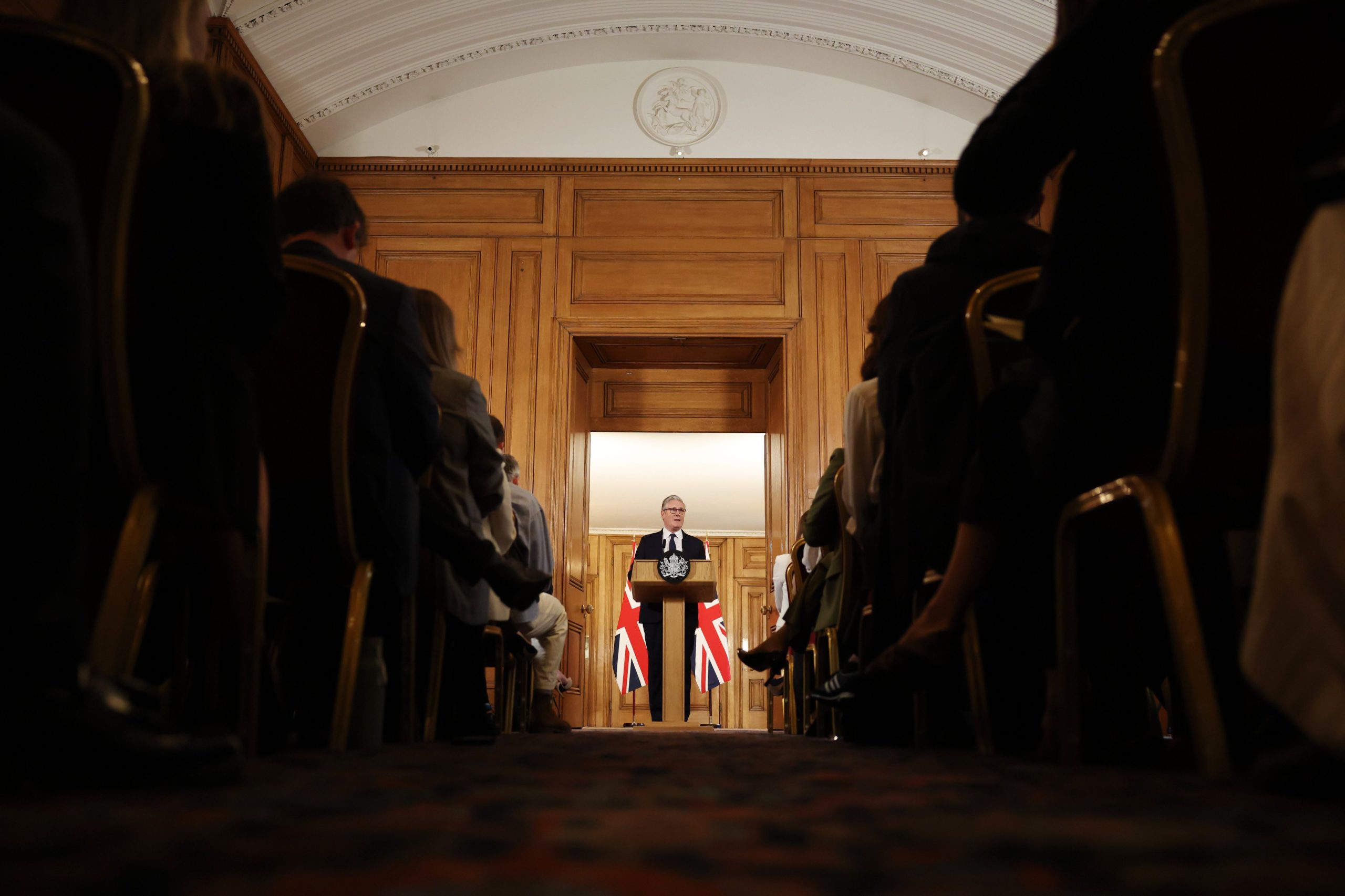
Keir Starmer has announced his resignation as Prime Minister. The Labour leader confirmed his departure in a statement outside Downing Street on Monday (22 June).
Starmer, who took office in July 2024, leaves after less than two years in office, ending weeks of speculation over his future.
He opened by reflecting on Labour’s return to power. “A new Labour government, the first in 14 years,” Starmer said. “A page in our country’s history turned after years of disappointment and despair, the chance to change the lives of millions of people for the better. That’s what I came into politics for.”
Starmer set out the position he had inherited as party leader. “The journey to that point was not easy. Six years ago, I inherited a Labour party that was politically, financially and morally bankrupt,” he said.
“I was told time and time again that my party was finished, that we were consigned to history, that a majority at the general election, let alone a landslide majority, was impossible.”
He pointed to the changes made under his leadership. “We proved those people wrong because we changed our party, ripping out the poison of antisemitism, restoring trust on the economy, defence and national security, and becoming a party that once again stood proudly with God against our national flag.”
Starmer framed that work around what he described as a single purpose. “The hard work of change was with a singular purpose, not power for power’s sake, but to change Britain for the better, to build a fairer country with dignity and respect, where everyone is seen, everyone is valued, wealth and opportunity for all, not just the privileged few,” he said.
He then turned to the question of his leadership. “The question my party is asking now is whether I am best placed to lead us into the next general election. I have heard the answer of my parliamentary party to that question, and I accept that answer with good grace.”
Confirming his decision, Starmer said: “Every decision I’ve taken has been about putting the country I love first. That is why I will resign as leader of the Labour party. I have spoken to His Majesty the King this morning to inform him of my decision.”
The announcement follows Andy Burnham’s victory in the Makerfield by-election last week, which cleared a path for the Greater Manchester mayor to mount a leadership challenge. Burnham, 56, returns to Parliament after winning the seat on Friday and is among the figures named as a potential successor.
Pressure on Starmer had built for weeks across the parliamentary party.
Former Health Secretary Wes Streeting, who resigned in May, claimed last week to have secured the backing of the 81 Labour MPs required to trigger a formal leadership contest and said he was prepared to act if Starmer did not set out a departure timeline. Streeting is among those discussed as a possible candidate to replace him.
Several ministers left the government in recent weeks. The two most senior defence officials resigned on 11 June, citing concerns over funding for the Defence Investment Plan. Their departures added to a run of resignations from Starmer’s frontbench through the spring.
The party’s standing had deteriorated sharply at the ballot box. In last month’s local elections Labour lost more than 1,100 council seats across England, while Reform UK, led by Nigel Farage, gained more than 1,450. More than 80 Labour MPs publicly called on Starmer to step down in the aftermath.
On Sunday, US President Donald Trump posted on Truth Social that Starmer “will resign as Prime Minister of The United Kingdom,” claiming the British leader had “failed badly” on immigration and energy.
The post pre-empted any public statement from Starmer, and Downing Street said the Prime Minister had not spoken to Trump over the weekend. Earlier the same day, Business Secretary Peter Kyle said Starmer was taking time to reflect on the political situation, softening the leader’s earlier vow to stay and fight.
As recently as Friday, Starmer had pledged to contest any challenge, stating he would “run” and “stand” in a leadership race and would not walk away. Downing Street had reaffirmed that position on Monday morning, hours before his resignation statement.
Attention now turns to the process for choosing a successor and the timetable for any contest. Labour’s rules ordinarily require a formal leadership election, though the timeline can vary; a senior Cabinet member could be asked to serve in an acting capacity in the interim.