What you should know about new data centres and noise complaints in the UK

Key Points
- Epping Forest District Council granted Google outline consent for a North Weald Airfield data centre on 10 December 2025.
- Outline consent settles the principle of development and defers detailed noise and plant specifications to a later Reserved Matters stage.
- The council's modelling found noise of up to 18dB above background during emergency operation, graded major adverse at night.
- A "not significant overall" verdict relies on mitigation and plant that have not yet been finalised.
- The BS 4142 10-decibel threshold has been relaxed for the site because generators are expected to run only in emergencies.
- The Department for Science, Innovation and Technology repeated its standing statement and did not answer specific questions.
- The consent also faces a separate legal challenge over climate mitigation from Foxglove and Global Action Plan.
A Google data centre on the edge of a Essex village has been granted planning permission before the level of noise it will generate has been established, with the assessment deferred to a later stage of the process.
Epping Forest District Council’s planning committee granted outline consent for the data centre on North Weald Airfield on 10 December 2025.
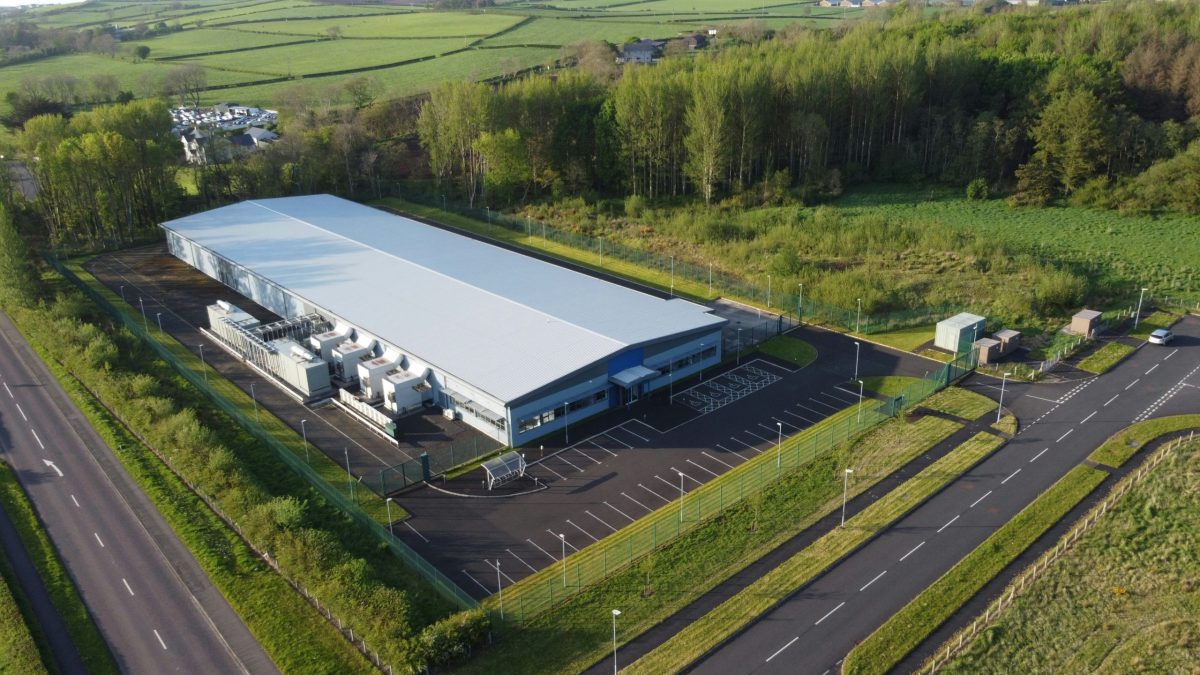
The scheme covers up to two data centre buildings and offices totalling 77,148 square metres, along with emergency back-up generators, fuel and battery storage, substations and a secure perimeter. Google paid the council £88.2 million for 21 hectares of the council-owned airfield.
The council’s committee report states that the scheme could produce up to 780 local jobs and around £79 million a year in gross value added locally, rising to as much as £319 million nationally.
Outline consent establishes the principle of development but leaves the detailed specifications, including the plant and its noise output, to a later application known as Reserved Matters.
Asked by HotMinute how loud the site would be, the council said the detailed application would specify the scale, layout and type of plant “along with actual likely noise and vibration likely to be generated,” and that a fuller assessment of the impact on neighbouring homes would be carried out at that stage.
The council’s existing noise modelling found that routine testing of the emergency generators could exceed background sound levels by up to seven decibels, an effect it graded as minor to moderate adverse.
During an emergency, with all plant running simultaneously under worst-case night-time conditions, it found noise could reach 18 decibels above background, producing “major adverse effects at most receptors.”
The council said these impacts would be reduced through mitigation secured by planning conditions, including quieter plant, acoustic screening, enclosures around the generators, set-backs from the nearest homes and increased exhaust attenuation.
With those measures in place, it said, the residual impact would fall to minor during normal operation and moderate during testing and emergencies. On that basis, it concluded that noise from the completed development was “not considered significant overall.”
The council confirmed the mitigation has not yet been finalised. It said the position of the back-up generators had not been confirmed and that the units might be moved further from homes than shown in the worst-case scenarios. An updated noise and vibration assessment reflecting the final design must be submitted and approved before the development can be occupied.
The 10-decibel threshold central to the case is drawn from the British standard BS 4142, under which a margin of that size would normally indicate an adverse impact.
The council said it considered it reasonable to allow a higher threshold than usual because the plant would operate only during infrequent, short-duration emergency outages.
A planning condition caps overall noise from all plant during an emergency at 10 decibels above background, and limits routine generator testing to daytime hours and to five decibels above background.
The government did not address the specific questions HotMinute put to it about the noise threshold or whether continuous-running data centres should be assessed differently from other buildings.
A spokesperson for the Department for Science, Innovation and Technology said data centres “come under the same planning rules when it comes to noise, as any other development, with policies in place to keep adverse impacts on communities to a minimum.”
It pointed to the National Planning Policy Framework, which states that planning decisions should avoid noise giving rise to significant adverse impacts on health and quality of life. The statement was identical to one the department had already issued to other outlets.
The North Weald consent remains contested on other grounds. Leigh Day, acting for the civil society group Foxglove and the environmental charity Global Action Plan, has written to the council seeking clarification on climate change mitigation measures, arguing the planning balance did not explicitly reference greenhouse gas emissions or energy efficiency.
A Reserved Matters application setting out the final design and the detailed noise assessment is expected in due course.