Nvidia reveals RTX Spark superchip for next-level AI and gaming on Windows

Key Points
- Nvidia has revealed its new RTX Spark superchip, a unified CPU and GPU on a single chipset designed for on-device AI and gaming.
- The chip will be integrated into a new generation of Windows laptops and portable desktop machines, with devices rolling out this autumn.
- Nvidia is positioning RTX Spark as the go-to chipset for AI video generation and on-device agents, as well as the next-generation of AI-powered gaming.
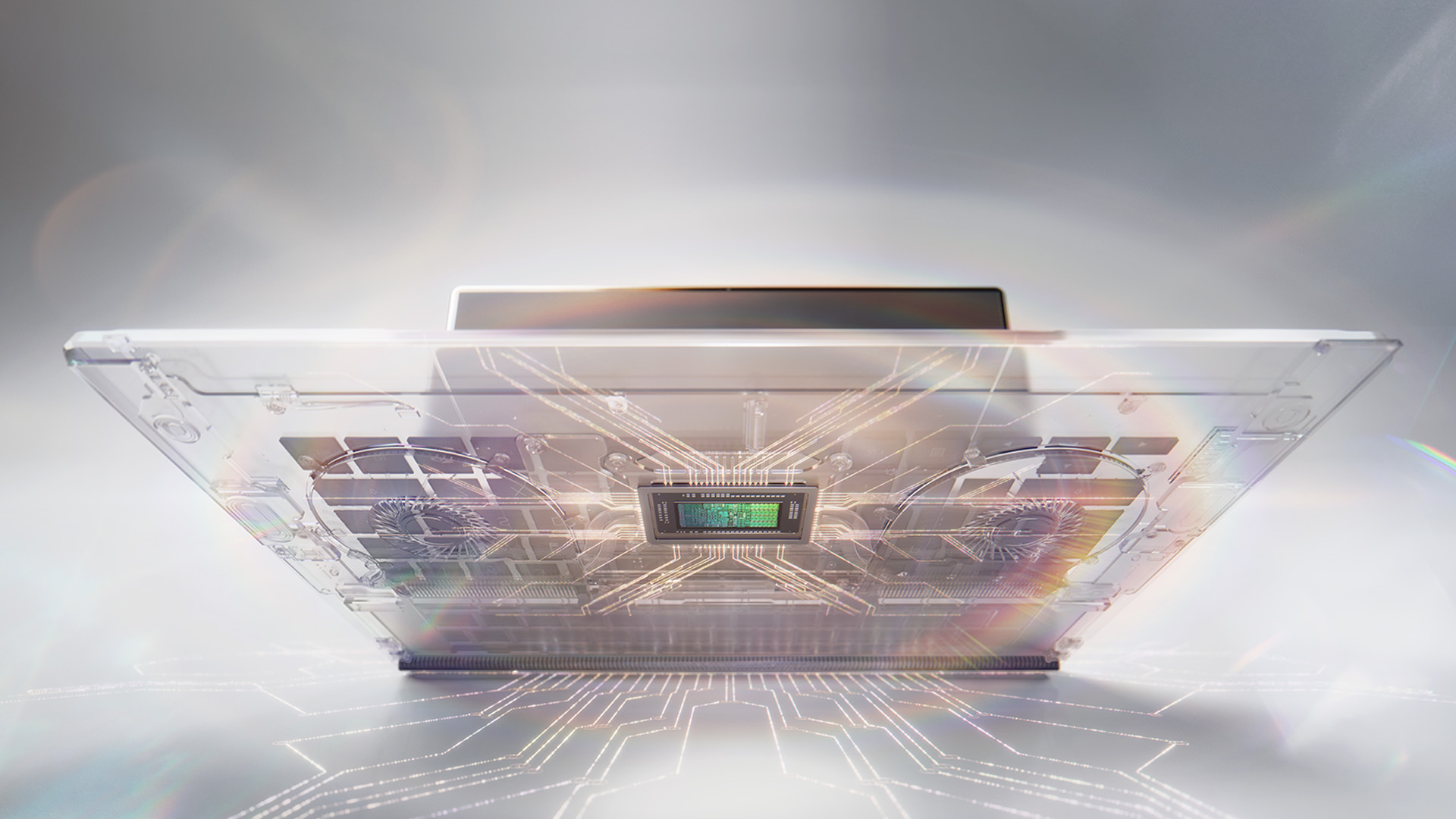
Nvidia has unveiled RTX Spark, a new unified superchip for Windows PCs that is purpose-built for AI agents and portable gaming.
The new chipset is both a CPU and GPU fused together in a single package for portable and power-efficient computing on Windows laptops and other lightweight devices.
RTX Spark features an Nvida Blackwell RTX GPU with 6,144 CUDA cores and fifth-generation Tensor cores with FP4 precision, connected to a high-performance, 20-core Nvidia Grace CPU, which was designed in partnership with MediaTek.
Nvidia claims that with RTX Spark, it has reinvented the PC to deliver powerful, on-device AI and gaming performance without the need for dedicated external GPU hardware or a separate high-end remote machine.
AI is the central focus of the chipset’s design. RTX Spark allows users to generate 4K AI videos and run 120B LLMs with large context windows directly on their own device, without the need to rely on expensive cloud computing options.
Gaming is also a powerful potential use case for the new chipset, however, as APUs are used in a range of portable gaming devices and consoles.
Nvidia says the RTX Spark will deliver 1330p gaming at over 100 frames per second, making devices with the new chipset an attractive option for gamers.
A new hardware standard for AI agents
Nvidia focused heavily on the use case of AI agents in it announcement of RTX Spark, referencing the popularity or projects like OpenClaw and Hermes Agent.
The adoption of these projects has been limited by the lack of appropriate and accessible hardware for everyday users, which Nvidia aims to address by providing a robust, secure platform on-device agents.
The company has partnered with Microsoft to deliver and secure the Nvidia OpenShell runtime, which allows agents to run safely and under full user control, allowing them to define what agents can and cannot do. The runtime also allows the user to disguise personal information in any queries sent to cloud-based AI models.
Nvidia’s RTX Spark chip itself is capable of impressive on-device AI performance, featuring up to 1 petaflop of AI compute and 128GB of unified memory, which is one of the most important specifications for local AI performance.
The superchip can render 90GB 3d scenes with OptiX and DLSS, edit 12K 4:2:2 video, and it supports ray tracing, DLSS, and Reflex for gaming.
It will also support DLSS 4.5 Ray Reconstruction and RTX Video with 4x Frame Generation in the ComfyUI node-based framework for AI image and video generation.
Where will RTX Spark be available?
Nvidia’s RTX Spark chipset will be embedded in a new range of Windows laptops and compact desktop machines designed for creative production, AI agent deployments, and gaming.
The first range of RTX Spark-powered Windows laptops will be available from ASUS, Dell, HP, Lenovo, Microsoft Surface and MSI this autumn, after which laptops from Acer and GIGABYTE will also roll out.
These laptops will come in 14- and 16-inch form factors, and will offer features including OLED displays with G-Sync support, as well as improved power efficiency.
Manufacturers are also planning to integrate RTX Spark into lightweight, ultra-efficient desktop machines that are portable, power-efficient, and highly performant for everything from gaming to AI video generation.
“The PC is being reinvented. For forty years, you launched apps. Click. Type,” said Nvidia founder and CEO Jensen Huang.
“With RTX Spark and Microsoft Windows, you ask — and the PC does the work. RTX Spark brings everything NVIDIA has built — CUDA, RTX, our AI platform — into a single superchip. Local agents. Frontier models. Creative workflows. RTX games. All on a laptop.”
“This is the new PC. The personal AI computer,” he said.