Trump’s ‘crazy’ Easter message

Summary
- Q: What did President Trump post on Truth Social on Easter Sunday?
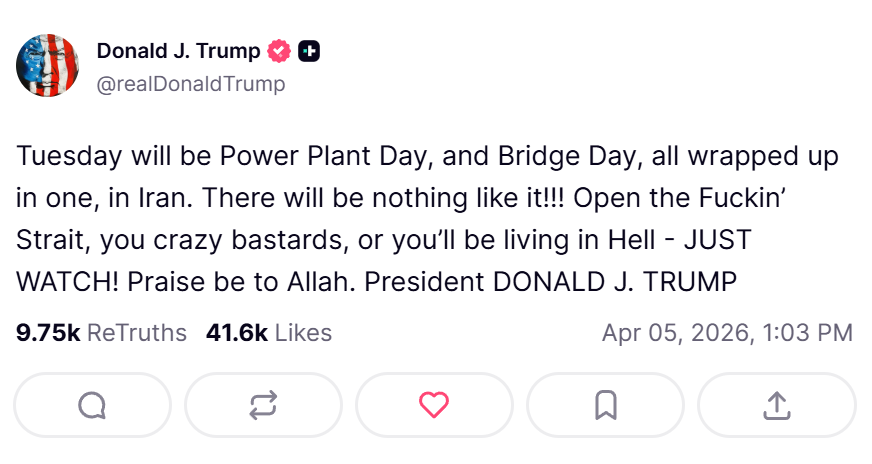
- A: On Easter Sunday, Trump issued a highly provocative post threatening military action against Iran. He declared that Tuesday (7 April) would be “Power Plant Day, and Bridge Day, all wrapped up in one” in Iran if the country does not reopen the Strait of Hormuz. The post included strong profanity: “Open the Fuckin’ Strait, you crazy bastards, or you’ll be living in Hell – JUST WATCH!” It ended with the ironic sign-off “Praise be to Allah.”
- Q: Why is the Strait of Hormuz central to this escalation?
- A: The Strait of Hormuz is one of the world’s most critical chokepoints for global energy security. Located between Iran and Oman, it connects the Persian Gulf to the Gulf of Oman and the Arabian Sea. Roughly 20-21% of global seaborne oil and a significant share of liquefied natural gas (LNG) pass through this narrow waterway annually. Iran’s effective blockade, in response to ongoing US-Israeli strikes, has disrupted oil flows, spiked global energy prices, and forced rerouting of tankers.
- Q: What specific geographic targets did Trump threaten?
- A: Trump singled out Iran’s power plants (energy infrastructure) and bridges (key transport links). Striking these would have widespread geographic ripple effects.
Article
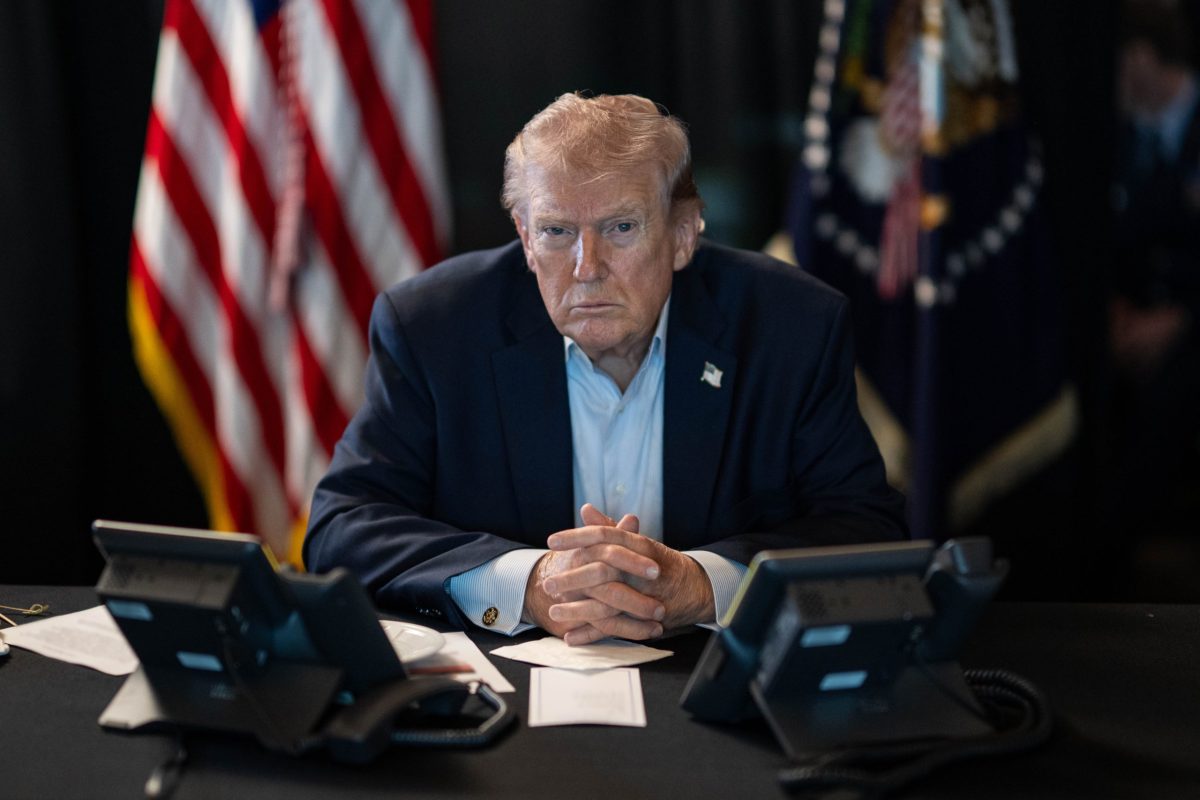
President Donald Trump used Easter Sunday morning to deliver a profanity-laced ultimatum to Iran, threatening widespread strikes on the country’s power plants and bridges if Tehran does not reopen the Strait of Hormuz by Tuesday (7 April).
In a Truth Social post published in the morning US Eastern time, Trump wrote:
“Tuesday will be Power Plant Day, and Bridge Day, all wrapped up in one, in Iran. There will be nothing like it!!! Open the Fuckin’ Strait, you crazy bastards, or you’ll be living in Hell – JUST WATCH! Praise be to Allah. President DONALD J. TRUMP”
The post, which quickly racked up tens of thousands of likes and reposts, contained no mention of the Christian holiday or traditional Easter greetings.
Trump had issued a more conventional Easter message earlier in the week, quoting the Gospel of John and declaring that “evil and wickedness will not prevail.”
The outburst comes amid an ongoing U.S.-Israel conflict with Iran that began in late February 2026. Iran has blockaded the Strait of Hormuz, the narrow waterway through which roughly one-fifth of global seaborne oil passes annually, in retaliation for U.S. and Israeli strikes.
The closure has disrupted oil shipments, driven up global energy prices, and rattled shipping markets from Asia to Europe.
Trump has repeatedly warned Iran that the U.S. could “easily” reopen the strait by force, take control of its oil resources, and even bomb Iranian infrastructure if necessary.
Last month, he briefly paused strikes on Iranian energy facilities after what he described as “productive conversations” that led to some oil tankers being allowed through. That pause was set to expire on Monday.
The Easter post follows Trump’s announcement late Saturday that U.S. forces had successfully rescued the second crew member of a downed F-15E fighter jet shot down over Iran last week. The high-risk operation came after Iran claimed credit for downing the aircraft.
Market and economic implications
The threat escalates a standoff with direct consequences for energy markets. Oil futures have already climbed sharply since the strait’s closure, with analysts warning of further spikes if US strikes on power plants and bridges materialise on Tuesday.
The US itself imports only about 2% of its petroleum liquids through the strait, but global supply chains, particularly in Europe and Asia, remain heavily exposed.
Shipping insurers and tanker operators have already rerouted vessels or halted transits through the Persian Gulf, driving up freight rates and contributing to broader inflationary pressures on energy-dependent industries.
Trump has urged U.S. allies that rely on Hormuz oil, including the UK, to “take care of that passage” themselves or simply “buy oil from the United States of America,” which he has described as having “plenty.”