Calls for evening congestion charge in London to fight traffic

A campaign group is calling for the extension of London’s congestion charge and parking controls to combat ‘evening rush hour’ in London’s West End.
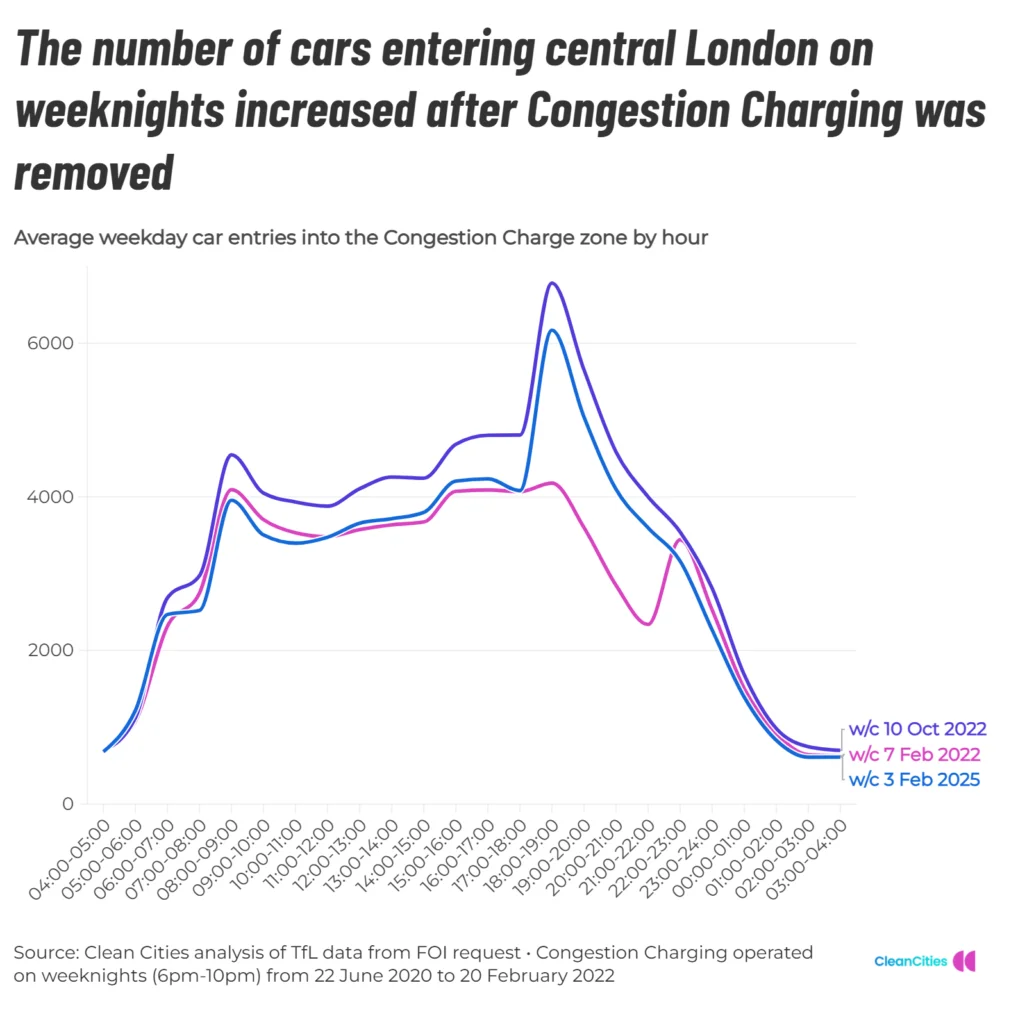
According to new research published by Clean Cities, traffic in London is now significantly work the even rush hour than in the morning. 56% more cars enter the congestion charging zone between 6-7pm compared to the morning peak of 8-9am.
The congestion charge and parking controls in the city end after 6pm, which may be encouraging this increased traffic.
Clean Cities has called for the Congestion Charge to be extended later into the evening to address this spike in evening traffic.
Until From June 2020 until February 2022, the Congestion Charge operated until 10pm on weeknights, and this period coincided with significantly decreased traffic in the centre of London.
Clean Cities said the lack of traffic management is actively encouraging additional car trips into central London in the evening, even as the vast majority of Londoners are frustrated with vehicle congestion.
The campaign group cited its own polling, which found that 95% of Londoners said congestion is a problem.
This issue is exacerbated by ‘carspreading’, the rapid growth in the size of vehicles generally, which means that each car takes up more road space – slowing traffic further.
Clean Cities said the number of SUVs on London roads has increased by 720,000 from 80,000 in 2002. If the 800,000 SUVs now in London were parked next to each other with a 1m gap between them, it would take up the same size as the borough of Kensington and Chelsea.
In response to these issues, Clean Cities have called on the Mayor of London and local councils to reduce congestion in the West End by extending congestion charge hours on weeknights, changing parking rules to discourage SUVs, and reallocating parking spaces to create more space for people.
“You’d think London’s roads calm down after work – but after 6pm the West End turns into the Wild West, with no congestion charge and few parking controls,” said Clean Cities UK Head Oliver Lord.
“Traffic gridlock isn’t inevitable, it’s the result of policy choices – when weeknight Congestion Charging was in place, traffic fell.”
“While cities across Europe make it easy and inviting to walk, spend and enjoy the evening, London’s night-time economy is being choked by cars,” he said.