Triple-blow for UK graduates looking for jobs


Young graduates in the UK are navigating a tougher job market as they face a range of challenges, new data from consulting firm McKinsey shows.
These changes have been noticed by employers, job seekers, and recruitment professionals alike, giving rise to concerns about young people’s job prospects in particular, the group said.
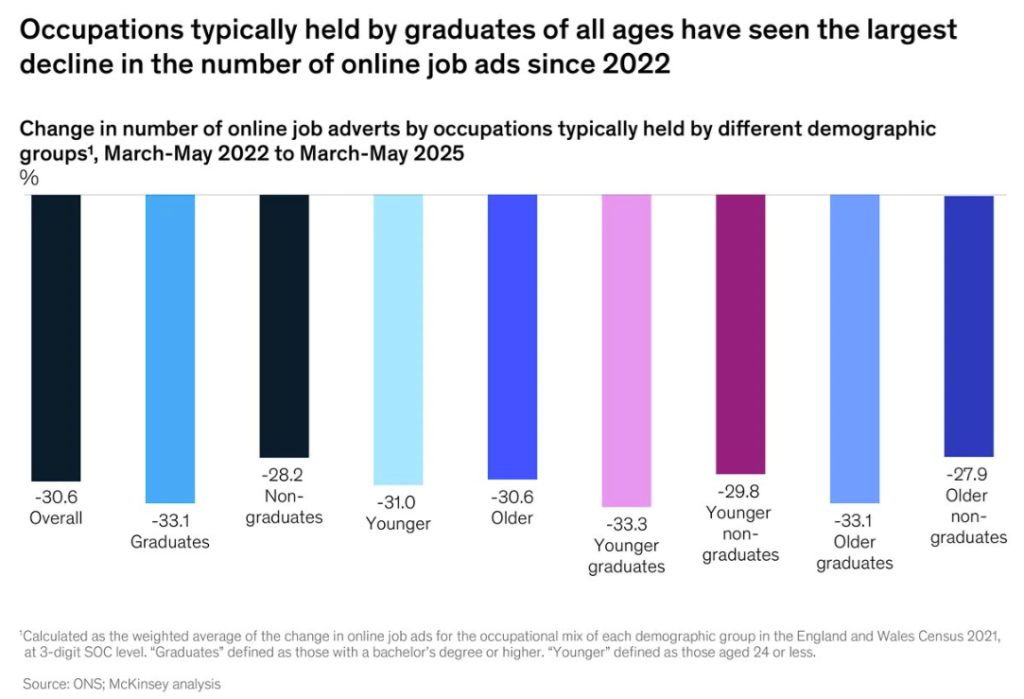
“Our analysis suggests that the story is nuanced, but that young graduates are potentially facing a triple-whammy: a general labour market slowdown, a sharper decline in graduate-level job openings, and reduced demand for lower-skilled roles which, despite not requiring degree-level qualifications, are often taken up by new graduates,” McKinsey said.
“At the macroeconomic level, rises in unemployment and declines in vacancies may favour those who already have a job, rather than those seeking their first posting.”
Historical data shows that youth unemployment typically rises faster and recovers more slowly than overall unemployment; young people are more likely to be in temporary roles, concentrated in cyclical sectors, or simply not yet established in the labour market.
Indeed, while the UK’s overall unemployment has increased from 3.8% in the three months ending in April 2022 to 4.6% in 2025, the rate for those aged 16 to 24 has gone from 10.9% to 14.3%.
“As far as graduate roles are concerned, however, it is not yet clear that vacancies have declined any more in jobs likely to be taken up by young people: job ads for occupations typical for both young and older graduates (with a bachelor’s degree or higher) have declined by 33% since the three months ending in May 2022,” the firm said.

“This likely reflects the similarity of roles and overlap in the tasks performed by younger and older professionals. However, when it comes to recruitment practices, organisations are often more likely to hire a more experienced candidate.”
Jobs that don’t require a degree
Finally, young graduates are facing challenges for a third, less obvious, and less AI-related reason: many start out in jobs that don’t require a degree.
In the England and Wales Census 2021, nearly 30% of graduates aged 24 or less worked in low-skilled jobs—as sales assistants or retail cashiers, in bars, restaurants, coffee shops, leisure parks, and storage facilities, or as care workers.
“Apart from call centre operators, these are typically not roles that are highly exposed to AI, because they require significant physical dexterity and social interactions,” McKinsey said.
“However, they have faced a more significant drop in vacancies than roles more typically held by older people. In contrast to professional roles, this slowdown is more likely due to weak consumer demand and rising employment costs, not AI.”